Edward Bernays took the oldest move in manipulation — one person working on another — and ran it on a whole country. Most people have never heard his name.
Ask ten people on your feed who Edward Bernays was. Nine will say nothing. The tenth will guess "some old ad guy?" and move on. That tenth person is closer to the truth than they know, and still nowhere near it.
Bernays did not just sell things. He built the machine that decides what a hundred million people want, without any of them feeling sold to. If you have read anything else on this blog about manipulation — flattery, gaslighting, divide and conquer, the quieter laws of power — you already know the mechanics. One person, working on one other person, pulling one lever at a time. Bernays took that exact toolkit and ran it on a nation. Same moves. Different scale. That is the whole reason this piece exists.
He was born in Vienna in 1891 and moved to New York as a one-year-old, so young he never had a Vienna childhood to speak of. His father Ely was in the grain trade. His mother, Anna, had a brother worth mentioning: Sigmund Freud, the neurologist who built psychoanalysis — the idea that you could understand, and even treat, a person's mind just by talking to them. That made Freud Bernays' uncle by blood. It did not make Freud his teacher. Nothing in the record shows Bernays taking formal training from him. The internet loves to turn this into "he weaponised his uncle's theories," and that line is doing more work than the facts support. What is true and interesting enough on its own: Bernays grew up with a direct, blood connection to one of the most influential minds of his century, and he later leaned on psychoanalytic consultants — not family favours, actual hired expertise — when it suited a campaign. We will get to exactly when.

He started in journalism, then drifted into theatre PR almost by accident. A 1913 play called Damaged Goods, about venereal disease, could not get funding or press because the subject itself was radioactive in public. Bernays' fix was not to make the play look less controversial. It was to make the controversy look respectable — he pulled in doctors and public figures, framed the play as a public health issue rather than entertainment, and watched the same censors who would have blocked it wave it through. Nobody had lied about the play. They had simply changed who was standing next to it when the public looked.
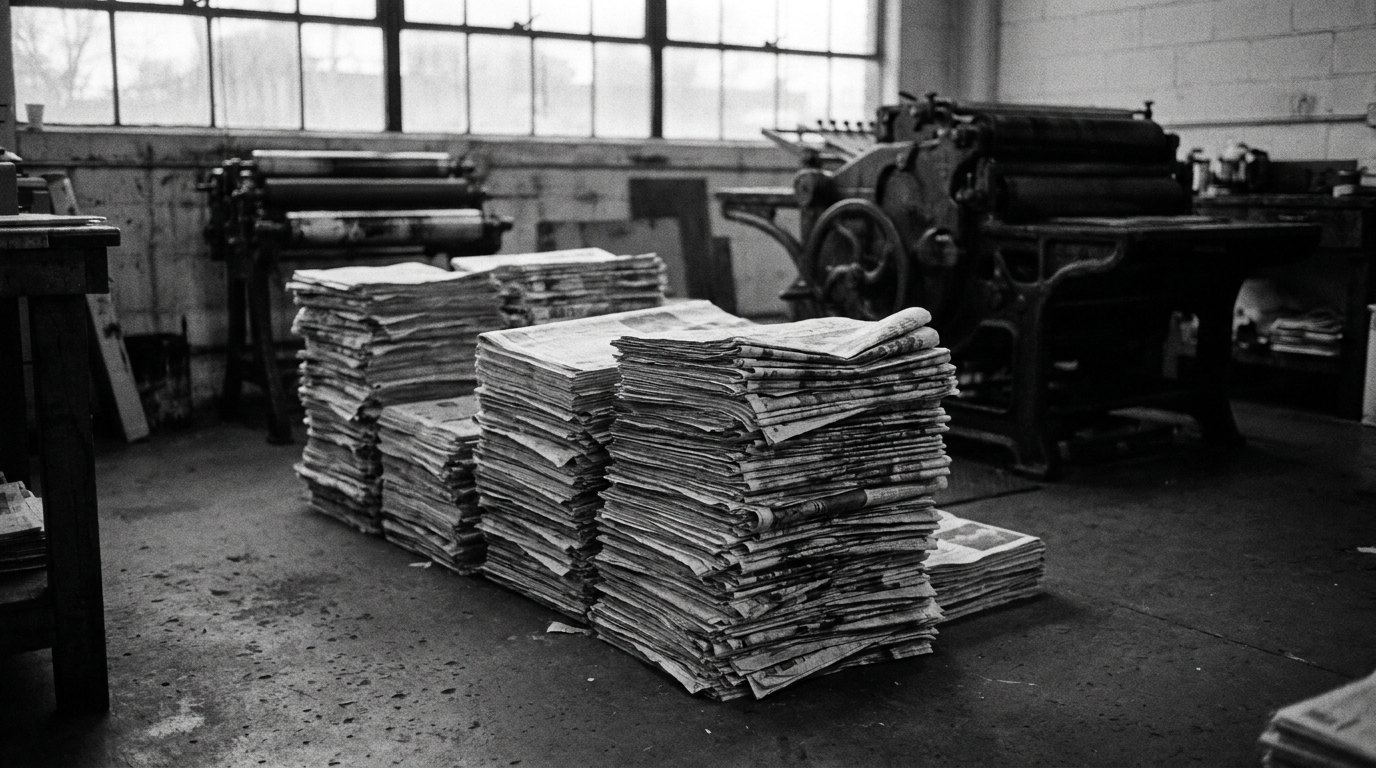
Then came the real education. In 1917, America entered the First World War, and President Woodrow Wilson had a problem: convince a country that a European war was suddenly its own fight. The government's answer was the Committee on Public Information, run by journalist George Creel — newspaper stories, posters, pamphlets, films, thousands of hired speakers called the Four Minute Men working theatre crowds between reels. One single message, repeated through every channel available, until it stopped feeling like a message and started feeling like the obvious truth. Bernays worked the CPI's foreign press desk and watched it happen from the inside. His own words on what he took from it: "I found that ideas were weapons, and were even more effective than bullets." He saw that you did not need to convince a person. You needed to convince the environment around them, and let the person arrive at the conclusion on their own.

That realisation is the hinge the whole rest of his career turns on, and it's worth sitting with for a second because it is exactly the move described on this blog whenever we talk about manufactured consensus — the tactic of winning through staged action instead of argument. Tell someone what to think and they'll push back by reflex. Show them a hundred small, independent-looking signals pointing the same direction, and they'll never feel pushed at all. Bernays didn't invent this instinct. He was the first to organise it into a repeatable method. After the war he refused to call himself an "advertising man" like everyone else in the trade. He named himself a Public Relations Counsel — the first recorded use of that term — because his real product was never an advertisement. It was public opinion itself, engineered quietly enough that the public believed it was their own.
By 1928 he had written it down plainly, in a book literally called Propaganda, arguing openly that propaganda wasn't only a wartime weapon — it was already running inside newspapers, political parties, and big business, whether anyone admitted it or not. Most people in his position would have hidden that word. Bernays put it on the cover.
Then, in 1929, came the piece of work that earns him the title of this article. The American Tobacco Company's George Washington Hill came to Bernays with a blunt commercial problem: half the population — women — simply did not smoke, and lighting a cigarette in public was, in several American cities, treated as a punishable act. Hill didn't need a better advertisement. He needed women's hands around his product, and no advertisement, however clever, could grant social permission for that on its own. Bernays understood the actual obstacle wasn't the product. It was meaning. A cigarette already meant independence and status — for men. In a woman's hand, the same object meant something shameful. So instead of selling the cigarette, he decided to change what it meant.
He consulted a psychoanalyst, Abraham Brill, who pointed out something simple: American women were already fighting for political rights, already pushing against a gender order that was visibly cracking. There was a real, live current of feeling to tap, not one he had to invent. Bernays named the campaign Torches of Freedom. On Easter Sunday, March 31, 1929, a small group of young women — accounts of the exact number vary, but ten is the figure most commonly cited — walked the Fifth Avenue parade and lit cigarettes in front of a crowd that had gathered for nothing more than the parade itself. He had picked the women, staged the moment, and fed the press a story angle in advance: not "a tobacco company hired women to smoke," which would have killed it instantly, but "women are smoking in public as a gesture of freedom." The New York Times ran it as a news event the next morning. Other major cities picked it up within days. A commercial product had just become a civil rights symbol, and nobody involved had technically lied about anything.

What makes this the best case study in the whole folder of manipulation stories we've covered here is that Bernays himself more or less said the quiet part out loud. He hadn't invented women's liberation. He had taken a real, already-existing desire and redirected it toward a commercial end that had nothing to do with its origin. That's a cleaner, colder form of manipulation than an outright lie — you don't need to plant a false belief in someone's head, you only need to reroute a true one. The campaign reportedly lifted first-year sales sharply; even once that held, a second problem remained: fashion-conscious women didn't like Lucky Strike's dark green-and-red packaging, and the company had already sunk too much advertising money into that colour scheme to change it. So Bernays didn't touch the packaging. He changed fashion instead — recruiting designers, retailers, and socialites, and staging a "Green Ball" at New York's Waldorf Astoria to make the colour green itself desirable, until a cigarette pack that hadn't moved an inch suddenly looked current.

If turning a cigarette into a civil rights symbol sounds like the limit of what this man could do, it wasn't close. In 1924, Republican candidate Calvin Coolidge had an image problem — by most contemporary accounts, he came across as stiff and forgettable, exactly the kind of candidate a mass audience struggles to feel anything about. Bernays didn't touch a single policy. He brought Hollywood to breakfast at the White House. On October 17, 1924, a group of film stars joined Coolidge for a meal, and entertainer Al Jolson performed a campaign song called "Keep Cool with Coolidge" for the room. The president hadn't changed. The country's problems hadn't changed. But the next day's papers had a completely different story to tell — a relaxed, likeable man surrounded by celebrities and music. Bernays hadn't changed Coolidge. He'd changed the scene around him, and let the story do the rest.
That distinction between changing a product's meaning and changing a person's meaning matters more than it sounds, because a cigarette buyer only spends money — a voter casts a vote, and an engineered perception of a person can move an entire government. By the 1950s, Bernays was working for the United Fruit Company, which held vast land in Guatemala and stood to lose much of it under President Jacobo Árbenz's land reform program. United Fruit reframed its own commercial dispute as a Cold War threat — Guatemala as a communist foothold, not a company losing acreage — and Bernays ran the machinery behind that reframing, circulating a steady drip of warnings to a network of roughly 250 American journalists, academics, and policymakers, who then carried it outward through newspapers, radio, and political speeches until it looked like independent public consensus rather than one company's talking point. The CIA formally entered in 1953 with an operation called PBSUCCESS, and by June 1954 Árbenz had resigned under military and psychological pressure. United Fruit got most of its land back shortly after. None of this means Bernays single-handedly toppled a government — the record doesn't support that — but it does mean he helped make persuasion into an organised, repeatable industrial process, built on the same principle every time: don't convince the crowd directly, convince the people who already have the crowd's trust, and let the message arrive looking like it came from nowhere in particular.
By 1947, Bernays had a name for the whole approach — "the engineering of consent" — and by 1955 an entire book treating public relations not as instinct but as a discipline: research, objective, strategy, theme, symbol, tactic, in that order, every time. He died on March 9, 1995, at 103, having lived long enough to watch his students run the century. The honest final lesson here isn't that he lied for a living. Most of what he did was built on facts that were technically true. The manipulation lived in the selection — which facts got surfaced, which got buried, which expert got the microphone, which image became the headline, and what emotion the whole thing got wrapped in before it reached you.
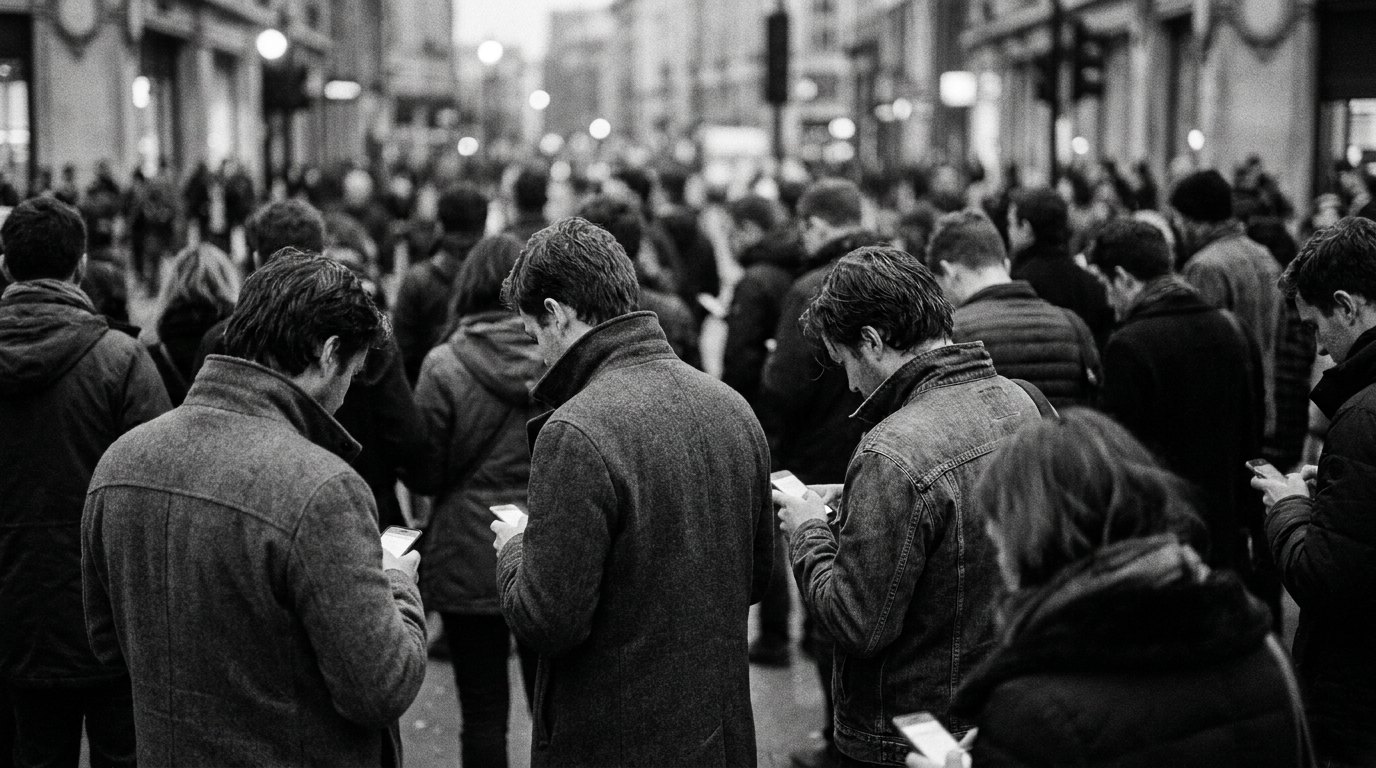
He had newspapers, radio, cinema, and a handful of trusted doctors and celebrities to coordinate. You have an algorithm that watches what you already want and hands you more of exactly that, and then watches you hand it to your friends for free — which means the crowd isn't just receiving the message anymore, it's doing part of the distribution work itself, amplifying signals it never designed. We'd like to think we're past being worked on this way. We're not; we've just added a layer where we help do it to each other. Somewhere underneath every brand that's become a lifestyle, every politician whose personality outweighs their policy, every belief that's gone fashionable overnight, is a version of the blueprint a quiet man in New York drew up a century ago. His real legacy was never the books or the campaigns. It's the one sentence that outlived all of it: the most powerful way to control someone is not to give them an order. It's to make them feel the decision was theirs all along.