Hitler's cruelty traces to a childhood helplessness he never faced, which calcified into a belief that his ambition made him incapable of being wrong.
Let's get one thing straight before anything else. This piece is not, in any way, an attempt to glorify Adolf Hitler. The only reason it exists is so you can understand the psychology of a man like him. Don't form your opinions from what follows. Opinions have consequences. What you do with this after that is on you.
1909. A twenty-year-old Austrian boy is asleep on a park bench in Vienna. Nobody knows his name. He has no money, no home, no future. He's just been rejected from art school, not long after losing someone who mattered to him more than anyone else alive. He is, by every measure anyone could apply to him that night, a failure. A helpless, powerless failure.
Thirty years later, this same man becomes the reason for the largest war in human history. Because of him, close to six million Jews are murdered. A period so soaked in chaos that if you look back at it now, all you see is blood. A man who showed the entire world a face of ambition so total it is still frightening to look at, decades on.
A homeless, defeated man who had lost at everything — how does he become the cruelest man of the century? Ask most people and the answer comes fast: he was a monster. A madman. Something you wouldn't even call human.
That answer feels decent. It sounds like the humane thing to say. It is also dangerous, because it is wrong. It's dangerous exactly because it keeps us away from the truth. Psychologists, philosophers, historians who have spent decades studying Hitler, reading him, trying to understand him — what they kept arriving at was uncomfortable. Because it showed Hitler as a human being. Just a human being.
So let's actually ask the question properly. Why did a human being turn into something we refuse to call human? I'm talking about Adolf Hitler.

To understand Hitler you have to start where all psychology starts. Childhood.
Adolf Hitler was born on 20 April 1889, in a town close to the German border in Austria. He was the fourth child of Alois Hitler and Klara Pölzl. The three children before him had died in infancy. His mother Klara was carrying a grief that only a mother who has buried three children can actually understand. When Adolf was born, she poured whatever life she had left into him. People who knew Klara describe her as a genuinely good mother. She loved Adolf deeply — overprotective of him, more than most mothers. His father Alois was close to her opposite. Alois was a customs officer. Harsh discipline, a violent temper, a man whose only feeling for weakness was contempt for it. He beat Adolf. He beat Klara too. Adolf learned what powerlessness felt like before he learned much else. Klara was the one soft place in his entire childhood.

When Dr. Frederick Coolidge studied Hitler closely, years later, he found that the antisocial behaviour that developed in him as an adult was likely the result of exactly this childhood. But there's a deeper wound here, one that goes past simple cause and effect. A child who, because of his own helplessness, cannot protect himself or the people he loves — if that helplessness cuts deep enough, it grows into a pathological need for control once he's an adult. People who carry this become more aggressive, more possessive. You cannot outrun your wounds. You have to face them. If you keep hiding from them instead, they stop being wounds and become who you are.
Think about what that actually meant for a small child. A father he could neither fight nor escape. A boy who could save neither himself nor the mother he loved. That helplessness, left to grow, plants a hunger for control. And with that hunger comes the recognition of a need for power — a need whose bill the rest of the world would eventually pay.
Hitler never managed to deal with that helplessness, not even as an adult. He never faced the broken part of himself. He kept running from himself, without knowing that this same helplessness would become the engine behind his monstrous ambition. In December 1907, Klara died of breast cancer. Adolf was eighteen. With his mother's death he lost the one place that had ever given him love. He was alone now. A boy who had never managed to save his mother started, without quite realizing it, to see his country as that same mother. This time, he was going to save her. Whatever it cost. Unfortunately, the cost turned out to be enormous.
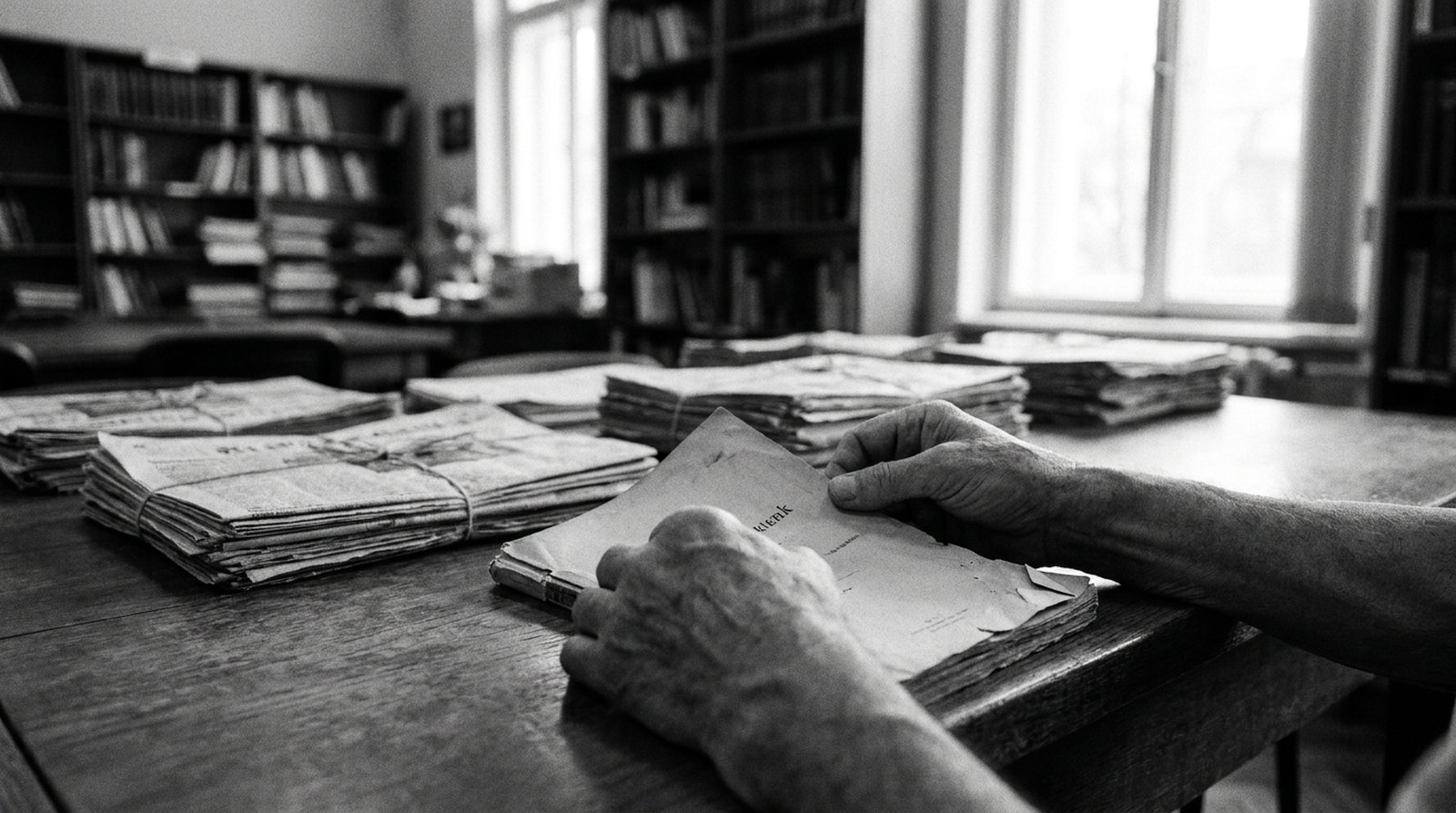
A few months after his mother's death he moved to Vienna. Things got bad enough that he had to sleep on park benches. The years from 1908 to 1913, what's called Hitler's Vienna period, turned out to matter more than almost anything else in his life. He was coming apart mentally. He needed something to hold onto. So he started reading — selectively. Antisemitic pamphlets. Writing soaked in hatred for Jewish people. Nationalist tracts that filled him with a manufactured patriotism. Social Darwinism, survival of the fittest repurposed as racial theory, which gave his hatred something that looked like scientific backing. His entire ideology got built in this period, out of this selective reading. The reading itself was never really about ideas. It was an excuse to run from his pain. Over time the ideology grew so strong that the helpless child inside it got buried completely. What survived were the wounds. And to settle the score for those wounds, he now had an enemy. An entire community. The Jewish people.
Nearly every dictator in history has used some version of the scapegoat method. Give people an enemy. Show the public a reason for their own defeat, their own helplessness, their own bad circumstances, and make sure that reason is a person or a community rather than themselves. The dictator convinces people: look, this is the group responsible for everything wrong in your life, and I am against them. Get rid of them, and the way to do that is to choose me. People's own instinct to run from responsibility does most of the work here. This is exactly what Hitler did. He showed an entire nation the Jewish people and told them: these are the ones responsible for your defeat, they are bleeding you dry, if you want to fight them you need to unite, that's the only way to win, come with me, we will save Germany.
When a dictator shows hatred toward a particular people, that hatred doesn't have to be real. Usually it isn't — it's a performance, calculated, aimed at whatever the crowd needs to hear. Hitler is the exception. His hatred for Jewish people was not a performance. It was personal. It was his way of running from himself, which is exactly why it was real. You can hear that conviction in his speeches even now. The hatred was actually there, which is also why people believed him. He wasn't only lying to everyone else. He was lying to himself, so completely that he ended up believing his own lie.

Adolf Hitler's relationship with right and wrong was genuinely strange. It wasn't that he didn't know the difference. It was that his belief in himself was so absolute that he didn't consider himself capable of being wrong in the first place. He thought of himself as chosen. A kind of messiah. He believed the fate of Germany, and of the entire world, rested on him specifically. So whatever he decided was necessary on that path, he did — and in his own mind, every bit of it was justified. The deaths. The massacre. The cruelty. The war. A hunger for power fed by the ambition to conquer the entire world is more than enough to blur the line that morality depends on. For him, whatever was necessary was, by definition, justified.
He lied to people with a conviction so complete that the lie came out sounding like the truth — because inside him, that conviction genuinely existed. You can fake the truth in front of a crowd for a while. You cannot fake conviction for thirty years. It has to actually be sitting underneath everything you say, or eventually, people hear the gap where it should be.
That's the man, as far as this case can take him without turning into a story you end up rooting for. A boy who never got to save the one person he loved, who spent the rest of his life trying to save something else instead, and convinced an entire country to let him do it by any means he decided were necessary. None of this explains away what happened next. It explains how an ordinary kind of pain, left to rot long enough, built the machinery for one of the least ordinary cruelties in modern history. Calling him a monster lets the rest of us look away from that machinery. He wasn't one. That's the whole problem.