A fictional dialogue on how fear, religion and media get turned into distraction — and why the people being divided rarely notice who is doing the dividing.
Warning.
Good people — stay away from this one. Every character here, and every word they say, is invented. None of it is connected to anything real, and it shouldn't be. Nothing in this piece is trying to provoke you or incite you. But if something in it still makes you angry, that's on you, not on me. Take it as entertainment and nothing more. And one more thing, since we're being honest: it isn't necessary that everything said here is true.
Good. Now that's out of the way.
I go by Curious. That's the only name that matters here, and today I went to see a man we only ever call Sir. Sir doesn't have a name because he doesn't need one. He's rude. He's arrogant. He's cruel, if you want the honest word for it. He's also, according to the story I'm telling you, a ruler and a former politician. Don't ask me how, because Sir is entirely something I made up. I could have put him in the Oval Office if I wanted to. He exists because I needed someone who'd say the quiet part out loud. So sit with that before you read another word — nobody named Sir is answering questions anywhere. This is a scene I built to show you a mechanism, not a transcript of a real meeting.
With that settled, here's the scene.
"Curious. It's been a while. What's brought you crawling back?"
"Not for myself this time, Sir. My audience wants to understand something. Divide and rule."
"And you've come to me because I used to run a country."
"Exactly. So — the truth, or something close to it?"
"The truth, since you asked nicely. There are two words doing the work here. Divide — a split. Rule — power. That's the whole machine in two words."
"A split in what, Sir?"
"People. If people don't split, they don't fight each other. And if they're not fighting each other, their attention comes looking for us instead. A divided people is a distracted people. That's the whole point."
"On what basis, though? You can't just split people at random."
"Don't talk like a fool, Curious. You're better than that. Tell me — if you had to split a population, what would you use?"
"Colour, maybe. Who's dark, who's fair."
"Works elsewhere. Won't work here — too many of us look too alike for that line to hold. Think of something that actually bites where we live."
"Caste, then. People guard their caste hard."
"Closer. But caste splits you into too many pieces. I don't want a hundred little camps I can't control — I want two or three big ones I can point at each other. Think again. Something every ordinary person carries, something tied straight to who they think they are."
"Religion, Sir. Their god."
"There it is. Something that sits inside a person's identity, not just their opinions. Touch a man's religion and you're not arguing with him — you're threatening him."
A split doesn't need a reason that makes sense from the outside — it only needs to feel necessary from the inside. People already want somewhere to belong and someone to stand against; religion just hands them both at once, pre-labelled, ready to carry. Sir's point wasn't that faith is the problem. His point was that faith is load-bearing. Pull on it and a person's whole sense of who they are comes with it, which is exactly why it makes such good material for somebody who wants a population too busy to look up.
"But why would they actually turn on each other over it, Sir? Different religions, different gods — what does one group's god have to do with the next group's?"
"Because they want to be divided, Curious. The extreme ones especially — the ones who've decided their god is the only real one, their faith the biggest one going. That belief isn't as solid as they think. So you tell them their religion is under threat. Their god is under threat. Fear takes over from there. All we have to do is give that fear a reason, and point it at something — someone else's religion. The bigger one, ideally. Then we stand close to that bigger side. We get their support, and because we're standing right there, we get to steer their fear whenever we need to."
"And the ordinary people, Sir? The ones not extreme about anything, just living their lives?"
"Control what they see."
"I don't follow."
"A man finishes his work for the day, comes home at night. Where does his picture of the world come from? What's happening in his country, his city?"
"Television. His phone."
Whatever shows up on that screen becomes his whole picture of a country he can't see from his window — a person doesn't need to witness a riot to be afraid of one; he just needs it playing on a loop while he eats dinner. Sir's method didn't stop at choosing a side to feed the fear. It meant deciding, in advance, what the glass in every living room would show that week, and trusting that a man who sees the same threat ten times a day stops asking where the footage came from.
"So what you're saying, Sir, is we control the media. And whatever's online."
"Now you're thinking. A man becomes what he watches. Show him enough danger and he'll believe he's in it."
"But people only get afraid when something actually happens. Riots. Real clashes."
"Then we arrange for something to happen. Raise the temperature online and on air until it catches. Light a few real fires if the mood doesn't catch on its own. And while that's burning, back one side of it — openly, loudly. That side starts defending us. Depending on us. Dependency is a powerful thing, Curious. Keep their fear climbing long enough and staying dependent on us stops looking like a choice. It looks like the only option left."

Here's the part worth sitting with: nobody has to be lying to the crowd for this to work, because the crowd mostly lies to itself first. A frightened person doesn't want the complicated answer. He wants a direction to point in and a name for what's chasing him, and whoever supplies that name — however cynically — gets treated like a protector. The street gets swept clean within a day or two. The fear that put the glass on the ground in the first place takes a great deal longer to clear out, and that, as far as Sir was concerned, was the entire plan working as designed.
"Isn't that wrong, Sir? People take their god seriously. And we're just — using that."
"Spare me the innocence, Curious. You're better than that too. People want to be fooled. If we don't do it, someone else will. There's no price on goodness in this game."
"One more thing I'm not following. Divide. Rule. I understand both words. I don't understand the join between them."
"There's a third word sitting between those two. Nobody writes it down, but it's always there. Distract. Divide, distract, rule. The whole split only exists to keep people distracted — so people like me can rule in peace."
That third word is the one that explains the other two. Division on its own is just chaos — two angry crowds and no winner. It only turns into rule once the noise is loud enough that nobody's watching the till, the contracts, the decisions being made two floors up while everyone downstairs is busy arguing about whose god is bigger. Sir wasn't hiding the trick when he named it. He was pointing out that nobody ever bothers looking for a word that isn't written anywhere.
"And opposition, Sir — surely someone runs against you. What then?"
"Then you plant a story. Say the other party is tied to the other religion, that it only serves them. After that it stops mattering whether the opposition genuinely cares about people or not — nobody will back them anyway, because backing them now reads as backing the other side. And fear won't let anyone do that. At that point we're the only option left standing, however bad we are."
"But does the party you're propping up actually care, Sir? Genuinely?"
"Go dig through history if you want the honest answer. Nobody in this game cares. A person's worth, to us, runs about as deep as their vote. Some of them will sell that vote for five hundred rupees. A thousand, if you're generous. Which tells you they already know exactly what they're worth."
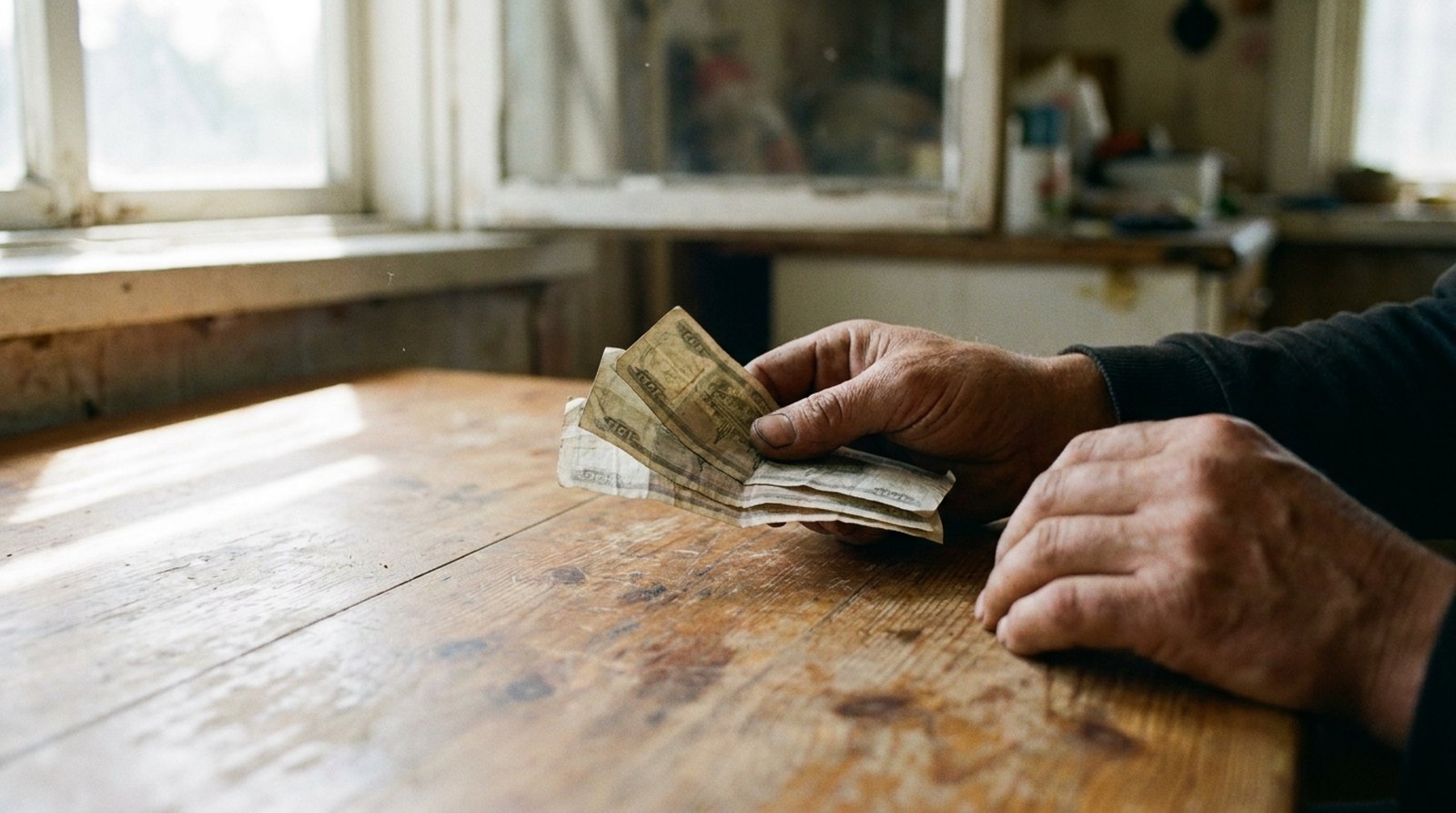
Scale the whole thing up and it stops being a neighbourhood argument and starts being how a country gets run. The method doesn't change size for size's sake — it changes because a few million distracted people are simply more useful than a few hundred. Everything that worked on one street — the fear, the borrowed side, the planted story about the opposition — runs the same way across a whole electorate. Only the number of people doing the dividing has to shrink, and the number of people getting divided has to grow, for the maths to work in the ruler's favour.
"What about the people who do see through it, Sir? Who try to tell the others?"
"Frighten the rest badly enough, and it won't matter. Someone can stand up and explain the whole operation out loud, and people still won't believe him — because by then the fear isn't just fear anymore, it's turned into a belief. And we make sure to look like we belong to that belief. So if anyone ever comes after us, people won't see it as an attack on us. They'll see it as an attack on their religion. Their cause. Something I built, and something they now think is theirs to defend."
That's the part that should actually bother you, more than the riots or the propaganda. It's not that people get lied to. It's that the lie gets adopted — carried, defended, repeated by the very people it was built to use. Show them proof afterwards and most of them will look away from it, because looking away now costs less than admitting they picked a side for a reason that was never real. That's not stupidity. That's what being divided actually feels like from inside it: certain, loyal, and completely unaware of which direction you've been pointed in.
None of this needs a king or a country to run. It runs in a department where two teams have been quietly set against each other so nobody notices who approved the budget. It runs in a family where old grudges get kept warm because peace would mean nobody needs a side anymore. Anywhere attention is worth more than the truth, somebody eventually works out that the cheapest way to hold power is to make sure the people under you are too busy fighting each other to look up and ask who's actually in charge.
"Thank you for your time, Sir."
"Don't come back too soon, Curious."
That's Sir for you — rude, arrogant, exactly as advertised. If anything he said landed badly, consider this your apology on his behalf; he isn't real, and he isn't sorry either way. Tell me in your own words what you took from this one. Divide and rule.
The underlying principle here — turning a group's own divisions into someone else's power — is drawn from Robert Greene's The 48 Laws of Power.