Zhuge Liang stopped an army with an open gate and a lute because his record, not the fort, was what his enemy was actually reading.
Somewhere in the 200s CE, during China's war between its three rival kingdoms — Wei, Wu and Shu — a Shu general called Zhuge Liang makes a decision that looks, on paper, like the end of his career. He sends his army off to a camp a safe distance away and stays behind in a small town with whatever men are left. Not an army. A handful.
For a while nothing happens. Then one of his guards comes running with the kind of news you don't want to be the one delivering. The enemy — a general named Sima Yi — is marching on the town. "How many men?" Liang asks. "About a hundred and fifty thousand," the guard says. Liang does the math. He has, generously, a hundred soldiers to his name. Everyone around him starts looking at their famous general like a man who's about to be caught.
Liang doesn't spend a second cursing his luck. He gives an order that nobody in that town could have predicted: take down every flag. Open the main gate. Everyone — go hide. His own men exchange looks, because this is insane, and he says it again, flatter this time: do what I'm telling you. They do it. Then Liang puts on his Taoist robe, climbs the highest wall facing the open gate, sits down with his lute, and starts playing and praying like he has nowhere else to be.

Sima Yi arrives at the head of his army and finds an open gate and an old rival calmly making music on the wall above it. He stands there a while, watching. Then he gives an order of his own: fall back. All hundred and fifty thousand men. Immediately.
Why would anyone retreat an army that size from a town held by a hundred men?
Because Sima Yi wasn't looking at the fort. He'd fought Liang before. He knew exactly what the man was capable of, and an open gate with calm music coming off the wall read, to him, as obviously another trap — the kind Liang specialized in. The actual situation — a man with almost nothing left, genuinely exposed for once — wasn't even available to him as an option, because Liang's record didn't allow for it. A hundred and fifty thousand soldiers were stopped by something that wasn't stone. It was reputation.
This is the fifth law in Robert Greene's 48 Laws of Power, and he states it about as plainly as any of them get stated: so much depends on your reputation — guard it with your life. Not a motivational line. An operating instruction. Your reputation is the foundation everything else stands on. A strong one wins arguments you were never in the room for. Attack somebody's reputation and you're attacking their foundation directly — knock it loose and the rest of them goes with it. So you build yours until it can take a hit from any direction, and while you're at it, you work on theirs too. Win that fight and you don't have to do much else. People will finish the job of tearing down a man whose name has already gone soft.
None of this worked by accident, and it didn't start that day on the wall either. Liang had a second name by then — the Sleeping Dragon — and every general in all three kingdoms knew it. A deserter lieutenant once walked into his camp offering intel; Liang saw through him instantly, ordered his head cut off, and stopped the blade at the very last second — then offered the terrified man his life in exchange for feeding the enemy false information for the rest of the war. He stole an enemy's military seal once and forged orders with it, moving an entire garrison out of a city he then simply walked into and took. Another time he convinced an opposing army that its own most trusted general was a traitor, and arranged things so that general had no option left but to defect to him. By the time he was standing on that wall, his name alone did half his fighting for him.

That's really what reputation is — a compressed version of your history that other people use instead of doing their own research. Nobody has time to re-evaluate you from scratch every time you show up. So they pull your file instead: what you've done before, what you're known for, what happened the last time someone tried you. Sima Yi didn't need to verify the empty fort in front of him. He already had years of Liang's file open in his head, and the file said don't.
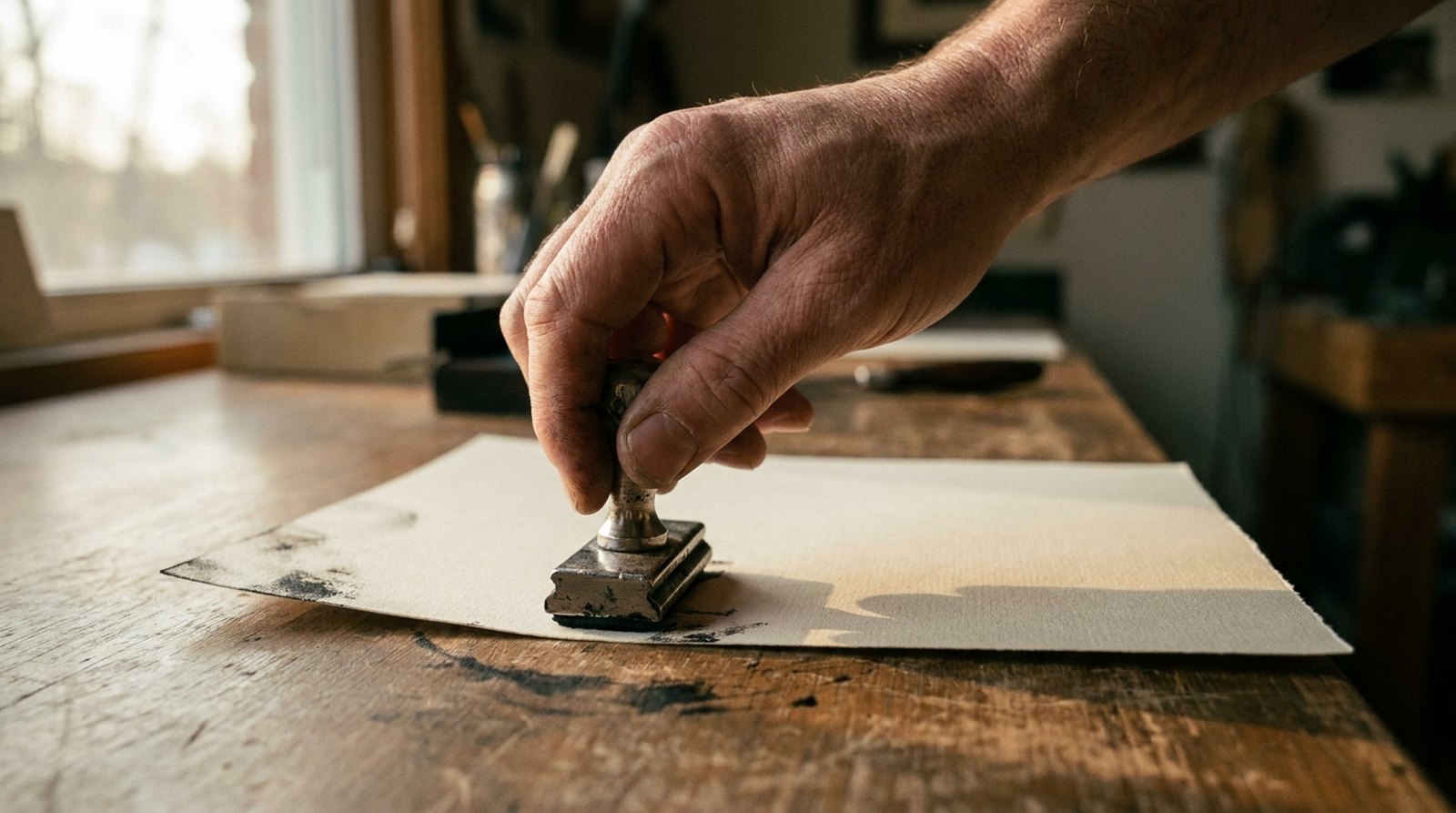
And notice how Liang actually built that file. Not with a speech. Not with a press release. With a string of specific acts, repeated — the forged seal, the turned lieutenant, the framed general — each one small enough to be a footnote and all of them pointing the same direction. That's the part people skip when they try to manufacture a reputation overnight. It isn't announced into existence. It's assembled, one consistent act at a time, until the pattern is so clear that people stop checking and start assuming.
Stories like Liang's make reputation sound like armor nothing gets through. It isn't. Ask a man named Peale.
In 1841, a young showman named P.T. Barnum decided he wanted a name for himself, and the fastest way there, he figured, was owning Manhattan's American Museum. One problem: he didn't have the fifteen thousand dollars it cost. He talked the institution's members into a verbal agreement anyway, running on borrowed guarantees and references. Then, at the last possible moment, the principal partners sold the whole collection out from under him — to men connected to a rival museum owner named Peale. Business is business, they told him. Peale had a reputation. Barnum, at that point, had none.
Barnum worked out fast that with no reputation of his own to trade on, he had exactly one move left: damage Peale's. He ran a letter-writing campaign in the newspapers, calling the museum's owners washed-up bank directors with no feel for art and no idea how to run a collection, who cared about nothing but money. He told readers not to buy Peale's stock — it was going to fall. It fell. The museum's own owners stopped trusting Peale. His track record and his name went down together, and Barnum built his name on exactly that collapse.

Peale never let it go. He tried to recover by rebranding his museum as serious, scientific entertainment — highbrow stuff, nothing like the carnival next door — built around the biggest attraction he had: mesmerism, what we'd now call stage hypnotism. It worked for a while; crowds came. Which annoyed Barnum enough that he went after Peale's reputation a second time, with Peale's own weapon. He staged his own mesmerism act — a girl supposedly in a deep trance, failed attempts to hypnotize people pulled from the audience, a performance of rising fury where he'd grab a knife and threaten to cut off the girl's finger to prove she felt nothing — and every time, right on cue, she'd jump up and run, and the crowd would howl with laughter. He ran that bit for weeks. Within weeks, nobody believed in mesmerism, or in Peale's museum. The crowds thinned out. The show closed. Barnum walked away the better showman. Peale never recovered.
Here's the mechanic underneath that, worth sitting with. Doubt is one of the most effective weapons there is. Raise a strategic, pointed doubt about somebody's reputation and they're stuck both ways. Defend themselves — and people start wondering why they're defending so hard, which makes the doubt look truer. Ignore it — and the doubt just sits there unchallenged, growing, until people assume the silence is an admission. Either way, you come out ahead. The only rule: make the doubt solid, like a rock, something people can hold onto. Whether it's actually true matters less than whether it's load-bearing. Mockery does the rest — it doesn't create doubt, it just makes the doubt already sitting there feel obviously true.
But know where the edge of this is. Go past it and you don't damage the other person's name — you destroy your own.
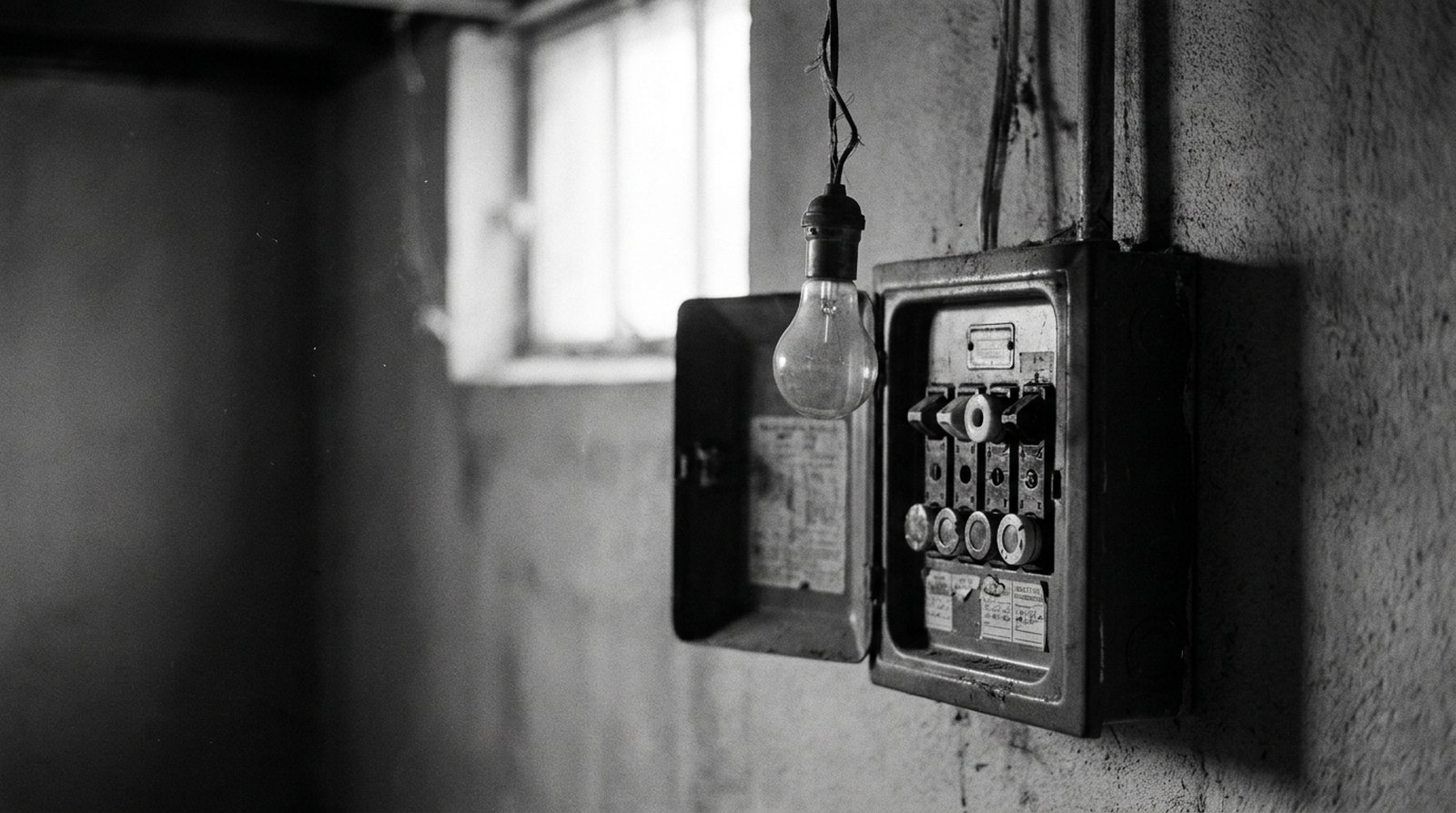
Thomas Edison, who built the electric light bulb, told the world his direct current — DC — was what people should run their daily lives on. A Serbian engineer named Nikola Tesla showed that alternating current, AC, was the one that actually worked for everyday use, and that DC, frankly, wasn't much good to anyone. Edison lost it. He decided he was going to bury Tesla's reputation. He started telling the public AC was dangerous, and to prove it, he had household animals publicly electrocuted with it, killed, to make his point stick. He didn't stop there. In 1890 he convinced New York State's prison authorities to use AC for the country's first execution by electric chair — his earlier tests had used small animals that a small charge could kill outright, but a man is not a household pet, and the first shock didn't finish the job. They had to do it again. It was, by every account, the cruelest execution anyone present had witnessed. Edison's name took a real hit for it. He recovered, eventually. But trying to bury Tesla cost him more than it ever cost Tesla.
So put a limit on yourself before you go after someone's name. Overdo it and you're not clever anymore, you're just reckless — and even on the days it doesn't dent your own reputation, you've built yourself an enemy you didn't need. Which is worth remembering, because the people around you — even the ones closest to you — stay strangers to some degree no matter how long you've known them. You can't sit around endlessly trying to work out who someone really is on the inside; there's no end to that exercise and you'll never land anywhere. So everyone, instead, judges everyone else by what's actually in front of them.
Your appearance. Your clothes. How you walk, how you talk, whether you smile, your hair, the look in your eyes. Whether you keep your word. Whether you respect other people. Whether you respect yourself. Put all of that together and that's your reputation, whether you were trying to build one or not.

You've heard the line that real beauty is on the inside. Fine — let's say that's true. It still doesn't change the fact that nobody can see inside another person on first contact, or tenth contact, most of the time. So what's actually available to work with is your appearance — and the real advantage there is that it's yours to decide. Behind it, you can keep your real self private, keep your actual intentions to yourself, and choose exactly how people are going to see you. That choice, repeated, is your reputation. Pick a quality early — honesty, generosity, even cunning, whatever fits you — and build toward it patiently and consistently. If the foundation isn't solid, people will eventually call you two-faced. A solid one does something for you without you lifting a finger: it announces you're there, it shows your strength, and it earns respect before you've said a word.
Here's the part that didn't exist in Liang's China or Barnum's New York, not like this. We live now in an age where strangers' opinions of us land constantly, whether we invite them or not. And it holds just as true here as it did on that wall: if you don't show people who you are, they will build that story themselves, out of whatever scrap they've got. Sima Yi, at least, had years of Liang's actual record to read before he made his call. Most people deciding what to think of you today don't have years. They have one post, one bad photo, one clip with no context, and no patience to go looking for the rest of the file.

By now you know exactly how much is riding on this. Your reputation decides how people treat you before you've opened your mouth. So own it — your life and your name, both of them — and stop standing around watching other people write it for you.
Law 5 from Robert Greene's The 48 Laws of Power: "So much depends on reputation — guard it with your life."