Lola Montez left a trail of ruined men behind her, and this chapter uses it to separate a person just drowning from an infector who needs the crisis to stay needed.
In 1818, in Ireland, a girl is born named Maria Gilbert. By 1840 she is in Paris, calling herself a dancer, trying her luck like every other nobody who gets off a boat in that city with nothing but nerve. It doesn't take. So in Spain she reinvents herself again — new name, new story, a flamenco dancer called Lola Montez. By 1845 that act is wobbling too. Survival takes over. For a stretch she works as a prostitute, and does it well enough that her name starts circulating around Paris on its own.
There is exactly one man who can save her dancing career. Alexandre Dujarier — he owns France's most-read newspaper and writes drama criticism on the side, which means he can make or break a performer with a paragraph. Lola decides she is going to have him. She finds out he rides every morning. Convenient — she happens to be an excellent rider herself. One morning she is on the same path, "by chance." He does not stand a chance. Within weeks they are riding together daily, and then she has moved into his apartment, and he is telling his friends he intends to marry her. He does not know she is already married — she'd fled an Englishman at nineteen and never divorced him.

Here is where it turns. Once Lola is in his life, Dujarier's business starts losing money. His well-connected friends start finding reasons not to see him. One of Paris's richest men throws a party; Lola wants to come, Dujarier says no, her social standing won't survive the room — and that is their first fight. He goes alone, and drinks more than he should because of it. At the party he spots Beauvallon, a drama critic who had torn into Lola's reviews. Drunk, Dujarier insults him in front of everyone. What he does not know is that Beauvallon isn't just a critic — he is one of the best pistol shots in Paris. By the time Dujarier finds that out and tries to apologize, it's too late. Beauvallon wants his duel. He gets it. Dujarier dies, exactly as you'd expect, and that is the end of one ambitious young man. Lola, grieving, leaves the city.
By 1846 she is in Munich with a new target: King Ludwig of Bavaria. But to get to a king you go through his court first, and the man who matters here is Count Rechberg, who has a well-known weakness for beautiful women.

Lola arranges to "fall" from her horse right in front of Rechberg. He helps her up. In that same conversation she asks him to get her a performance in front of the king. He agrees, and he does the work of arranging it — pulling in the right people, smoothing the way. Then, at the last moment, in the anteroom outside the king's chamber, Ludwig refuses to see her at all. She hears him through the door say he has no time for strangers begging favours. So she shoves past the guards. In the struggle her dress tears open at the front. Accident, or not — nobody can say. What's certain is the effect: the room goes silent, Ludwig most of all, and Lola gets her stage. Fifty-five hours later she performs. The reviews are bad. It does not matter. She has already won the only review that counts.
What follows looks less like romance than a man losing his mind in slow motion. Ludwig arranges performance after performance for her. He is seen holding her hand in public. He gives her an apartment in Munich, showers her in gifts, writes her poems. And as the fame comes easier than she's ever had it, her behaviour starts to slip. She horsewhips an old man whose carriage was in her path. Her dog attacks a stranger on the street, and instead of calling it off she turns the whip on the man it bit. Bavarians start to hate her. Ludwig never does — anyone at court who warns him about her gets removed from their post instead. He makes her a countess. She starts advising him on state policy. Her influence runs straight into the palace, and the public can't absorb it anymore. Riots start. One slogan, everywhere: Raus mit Lola. Get her out.

By February 1848 the pressure is enough that Ludwig sends her out of Bavaria, though by every account he does not want to. It changes nothing for him. The anger at Lola becomes anger at the king who protected her, and within weeks the pressure forces Ludwig off his own throne. She has already moved on to England, still legally married, and sets her sights on George Heald — a young army officer, ten years her junior, son of an influential barrister, a man who could have had almost anyone. She gets him anyway. They marry despite her undissolved marriage, and both are arrested for bigamy. Out on bail, they run to Spain, where they fight and she stabs him. Not fatally. Fatally enough for the marriage. She leaves. He goes to Portugal, broke and half-starved, and dies months later in a boating accident. In 1853 she is in California, married again, to a man named Pattull, and leaves him too, for someone else, not long after. Pattull drinks himself into the ground and dies of it. At forty-one, out of men to ruin, Lola turns to religion. She dies in 1861.
Here's the pattern, across every single one of them. Lola doesn't just date these men — she grips them. Each one ends up feeling like her pain is his pain, her problem his problem, like he is partly made of her. And each one, eventually, works out that the actual problem is Lola. By then it's too late to simply walk away, because by then she is load-bearing in his life. The infection — Greene's word, and it's exact — runs its full course through him while she, bored now, has already started pulling back, already looking past him to the next one. He understands what happened to him right around the time it stops mattering.
And don't make this about her being a woman. Gender has nothing to do with it. There are men who do exactly this.
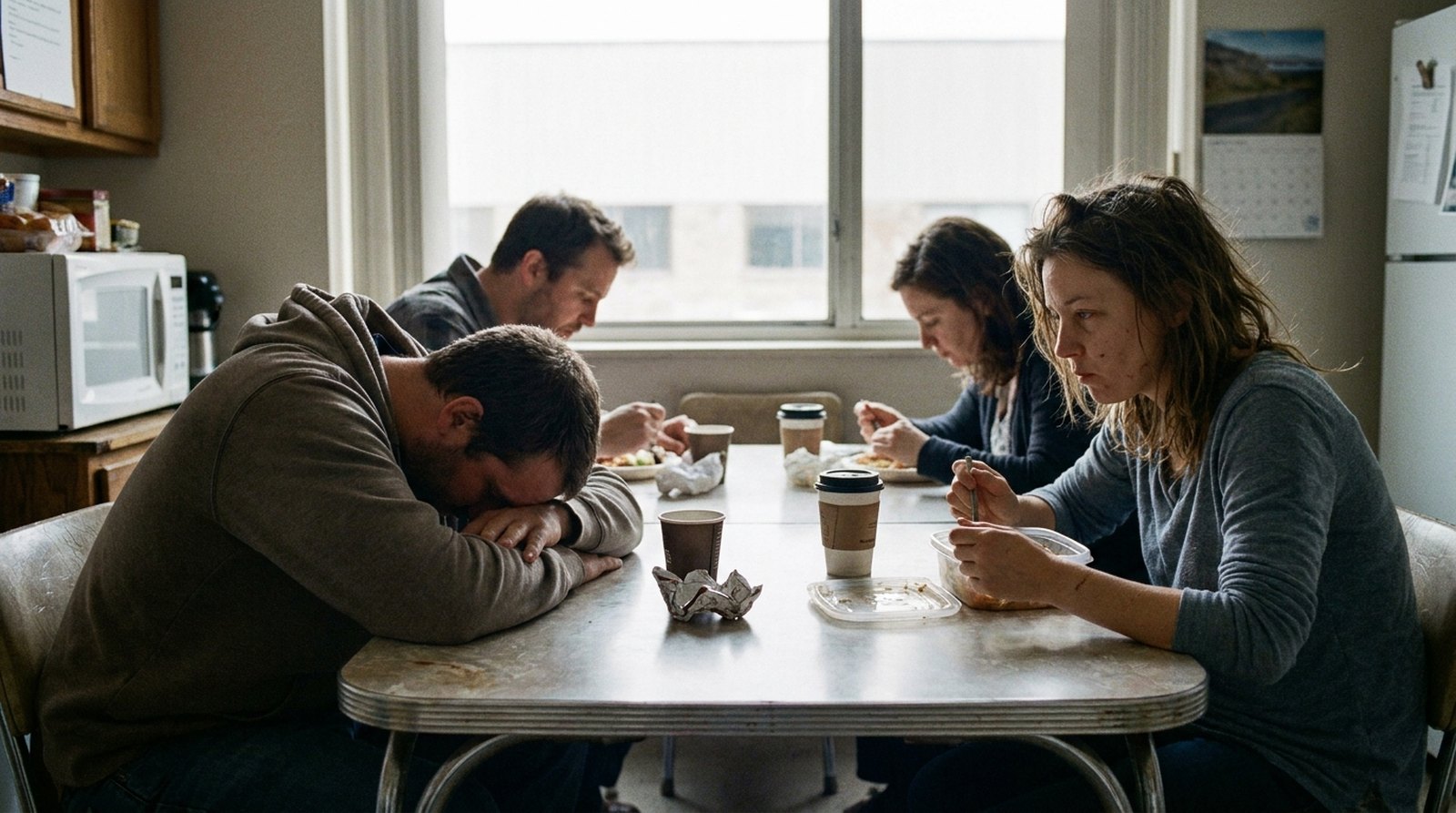
You know the glass of water question. Half-full, half-empty — ask a room and you get both answers, and neither answer is a problem. People who see the glass as half-empty are not what this law is about. Here's who it's about: the person who insists the glass is half-empty, and then — just to make sure everyone agrees with him — tips out the water that's still in it. That's the move. Not pessimism. The active production of worse. Some people are born into bad circumstances and spend their whole life trying to climb out of them — fine, that's not this either. This is the person who takes a genuinely good hand and finds a way to ruin it, because taking responsibility for anything is the one thing they will not do. There is always someone else to blame. A boss, an ex, bad timing, bad luck, and when none of those are convincing enough, God. A person who can never locate their own fault in anything never moves anywhere. That stillness is the infection.

If you think you've found one of these people, the move is simple to state and hard to do: get away from them. Don't argue them out of it. Don't try to fix it. Be a little cold about it and put your attention back on your own life. If your instinct says you can be the one who helps — you're wrong, and here's the mechanism, not just the warning: your mind is built to pick up the emotional state of whoever you're near. Spend real time with someone and some of what they are rubs off on you, whether you invited it or not. It goes the good way too — surround yourself with people who are ambitious and genuinely content and you drift toward that. But an infector carries a feeling strong enough to run the other direction, and they will dress it up as misfortune happening to them. It isn't. The bad situation is downstream of them. Don't confuse the two.
That confusion is exactly where this law gets dangerous, so slow down here. There is a real person drowning, and there is a real person pulling you in with them, and from a distance they can look identical. The drowning one is in a bad place and knows it — they're looking for a way out, they take the piece of the blame that's actually theirs, and when you help, something moves, even slowly. That person is not an infector. That person is just having a hard year, and abandoning them because you read a list of laws is its own kind of small. The second person is different in one specific way: nothing moves. You give time, money, patience, advice, and a year later they are in the exact same spot, still furious at the same people, still waiting for the apology that will fix everything, and somehow still finding new disasters that are never, ever their doing. Watch for whether they actually want out. The drowning person wants out. The infector needs the water, because the crisis is the whole relationship — take it away and there's nothing left for you to be needed for.

Be honest about your side of it too, because this is where people lie to themselves. Being the one who holds someone together feels good. It gives you a role, a story about yourself, a reason to be needed that doesn't require you to risk anything of your own. That feeling is exactly why you don't notice you've been standing in the same spot for two years. You tell yourself you're helping. What you're actually doing is spending your own time and your own mood on a project with no finish line, because the finish line would end the only thing making you feel useful. That's the cost, and it's not abstract — it's the version of your life you didn't get to live because you were busy managing someone else's.
None of this requires you to be convinced of anything, and the man who said it first wasn't trying to convince anyone either. Figure out which one you're standing next to. Then either put real distance between you and the infection, or get ready for exactly what it's going to cost you — because it will collect, one way or another.
The law above is Law 10 of Robert Greene's The 48 Laws of Power.