The Duke of Chiang executed his own minister to lull a rival's guard, and Victor Lustig returned Capone's money untouched, both proving one visible honest act buys cover for what stays hidden.
Ancient China. The Duke of Chiang wants the kingdom of Hu. He's wanted it for years, fought for it for years, and lost for just as long. So one day he stops fighting and tries something else: he marries his daughter to the ruler of Hu.
A few days after the wedding, the Duke calls his council and ministers into a room. He tells them he's planning a military campaign and asks which kingdom they should strike. One minister — trying to be useful, or maybe just not paying attention — says: why not Hu?
The Duke loses it. That's my daughter's kingdom, you bastard. How dare you even say it out loud. He has the minister killed, right there, in front of everyone.
Word of the execution reaches the ruler of Hu, and it does exactly what it's supposed to do. Here's a man, Hu thinks, who killed his own adviser for even suggesting an attack on his son-in-law's kingdom. That's not a man you need to worry about. Hu eases off his border defenses facing Chiang. Why would he keep his guard up against family?
A few weeks later, Chiang's army walks across that undefended border and takes the entire kingdom.
This was the plan from the first day. The marriage, the outburst, the execution — all of it staged for an audience of one. The Duke couldn't win this war on a battlefield, so he won it inside one man's head instead. He used honesty as a weapon, and he used exactly enough of it to get the job done. No more than that.

That's the whole law in one move. Robert Greene calls it Law 12: Use Selective Honesty and Generosity to Disarm. One honest act — loud enough, public enough — buys cover for a dozen dishonest ones underneath it. A display of integrity, delivered with conviction, can make even the most suspicious man in the room look trustworthy. Drop someone's guard with a bit of staged decency, and you get to do whatever you came to do.
You don't need to go back two thousand years for proof of that. You can go back to 1926.
A well-dressed young man walks in to meet Al Capone. Capone, at that point, is the most famous gangster alive, and everyone knows his business is built on bodies. Nobody crosses him. Into this room walks a stranger with an elegant continental accent, introducing himself as Victor Lustig — the same man, if you know the name, who later sold the Eiffel Tower. Twice.
Lustig asks Capone for $50,000. He says he needs it to fund a scam, and he'll double it and return it in two months. Capone knows exactly what Lustig is — a professional liar, that's the whole job description — and Capone isn't a man who hands over that kind of money for nothing. But something about Lustig makes him say yes. He counts out the cash. Sixty days, Lustig. Double it, like you said. Yes sir, Lustig says, and walks out.

Lustig doesn't touch the money. He puts the full $50,000 straight into a safe deposit box in Chicago and goes back to his other work — whatever else fills a con man's calendar. It sits there for sixty days, untouched, while Lustig gets on with his life. There's no plan being run. There's no scam being built. There's just a box, and time passing, which turns out to be the hardest part of the whole con.
On day sixty, Lustig walks back into Capone's office with the same $50,000. I'm sorry, Mr. Capone, he says. My plan failed. And so did I. Capone is watching him, already working out which river the body's going in, when Lustig puts the full amount back down on the table. Here's your money, sir. I couldn't double it. That's not usually how this goes for me, but I apologize. I let you down.
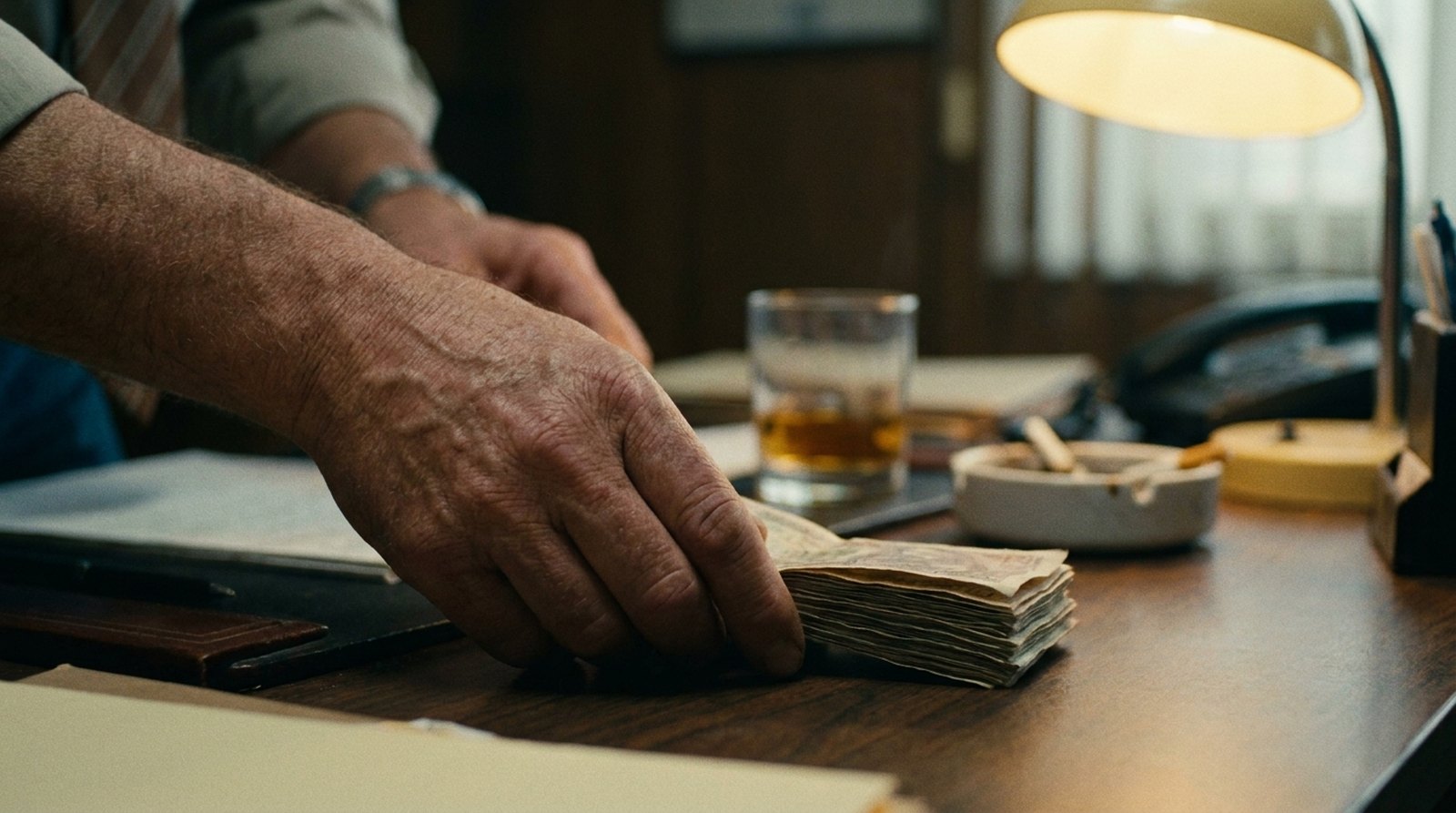
Capone is confused, and then he's something close to impressed. I know what you are, Lustig, he says. Lying is in your nature. When you walked in that door I figured you'd either bring me a hundred thousand or nothing at all. This — this is new. You brought my money back. Lustig looks ashamed, picks up his hat, starts to leave. Capone stops him. Hold on. Turns out you're honest. A con man who's honest. Here — take $5,000. Maybe it helps with the next plan. Lustig takes it, thanks him, and walks out stunned.
Stunned, because that $5,000 was the entire point. He was never running a scam on Capone's money. He was running one on Capone's opinion of him.
Now you're probably thinking — that's insane. Lustig had no way of knowing Capone would hand him anything at all. And even if he somehow knew, risking a conversation with Al Capone for five grand? You're right. He didn't know. And yes, picking a fight with Capone over a sum that small would be a stupid risk — for you, for me, for anybody normal. Victor Lustig was not normal. This was a man who spoke several languages, who could read a room instantly, who understood exactly which human weakness to press and how hard. He knew Capone's one blind spot was honesty, because nobody in Capone's world ever showed him any. So when somebody finally did, it didn't register as a transaction. It registered as proof of character.
That's the mechanism, and it's worth being precise about it, because it isn't really about honesty at all. The essence of every deception is distraction. Be selectively honest with people. Show them exactly what they want to see. A little real honesty, placed in the right spot, stops every question before it gets asked — and it leaves the other person feeling like they're the one in control. That feeling of control is the distraction. And nobody ever feels suspicious of someone being kind, generous, or honest. The human brain just doesn't run that check.
Which is also, by the way, how trust actually works day to day, with no gangsters involved. Nobody audits your whole record before deciding whether to believe you. People remember three or four things — the time you returned the wallet, the time you admitted you were wrong in front of everyone, the one apology that sounded real. That's the sample. The sample becomes the whole file, and the file rarely gets reopened. Which is exactly why one visible act of decency is so cheap, and so effective, against a pattern nobody's actually counting.

You've watched this play out with brands, not just people. A company gets caught doing something ugly, and the fix is never the hundred quiet decisions that led there — it's one public apology, one donation, one gesture everyone can see and point to. That single visible act becomes the new sample. People stop checking the file. The apology isn't the correction. It's the distraction wearing the correction's clothes. And once you've seen it done once, you start noticing it everywhere — the person whose decency only ever shows up where someone's watching.
But Greene doesn't let this run forever, and it's worth saying plainly where it stops working, because that's the part people skip. The whole move depends on the act looking purely selfless. The moment someone senses an angle behind your generosity, the generosity itself becomes the evidence against you. And if your reputation already is that of a liar, this trick is dead on arrival — the people who actually know you will hear the truth out of your own mouth and still assume it's a lie. At that point no amount of staged kindness buys anything back. You've spent the only currency this move runs on.

So use it if you're going to use it — Greene isn't pretending power is a clean game, and neither should you. We end up having to spend the very values we should actually hold, and I know that's not a comfortable thing to sit with. Some of you won't want to sit with it at all. Fine. But don't walk away from this confusing the move with the man. Don't start believing your own performance just because it worked on somebody else once. Be honest with yourself about what you're doing and why. Not selectively. Thoroughly.
Robert Greene lays this out as Law 12 in The 48 Laws of Power.