Tesla believed his work would speak for itself and died broke for it, while Edison took credit as a method and is remembered as a genius.
Learn to use other people's knowledge, their experience, their work. It buys you speed. It saves energy you don't have to spend doing something somebody else already knows how to do. Here's the part nobody wants to hear: people forget whoever helped. Not out of malice — that's just what memory does. It keeps one name per idea and lets the rest go. So learn to stand in front when the remembering happens. Don't waste your life doing what someone else can do for you.
1883. Continental Edison Company, European division. A young engineer from Serbia — sharp, restless, convinced the world could be wired differently than everyone around him assumed — works under a plant manager named Charles Batchelor. Batchelor likes him enough to tell him the truth: your mind is wasted here, go to America, they'll know what to do with it. The engineer agrees. Batchelor writes him a letter to the most famous inventor on the planet. The engineer is Nikola Tesla. The inventor is Thomas Edison.

Edison hires him the day they meet in New York. Tesla is good, obviously good, and Edison has a problem sitting on his desk that nobody has managed to fix — the DC dynamos running his whole direct-current system are inefficient, and the design is a mess. Edison hands it to Tesla almost as a dare. Fix this, he says, and I'll pay you fifty thousand dollars. He says it the way people say things they don't expect to ever have to make good on.
Tesla wants the money. But he wants something that mattered more to him than it should have: to be respected for it. So he works the thing like his life depends on it — days bleeding into nights — and redesigns the dynamos from the ground up. He brings Edison a solution that actually works, and asks for his fifty thousand dollars.
Edison's answer: you must be new here, you didn't get our American joke. The best he can do is raise Tesla's salary. Tesla walks out.

Because that's what the fifty thousand dollars actually was — not pay, a receipt. Proof, on paper, that the work had happened and whose hands had done it. Paying it would have meant Edison admitting that his own dynamos were broken and a twenty-something immigrant had quietly fixed what he couldn't. Edison had too much pride sitting on top of too much reputation to sign that admission. Tesla, for all his brilliance, never once saw it coming — he thought the work would simply speak for itself.
While he was still drawing Edison's salary, Tesla was quietly building something else: alternating current. Different from Edison's direct current. Not just different — better. But there was no force on earth that was going to get Edison to say that out loud, because saying AC was better meant saying Tesla was better, and that sentence was never going to leave his mouth. Edison didn't just withhold support. He came out and fought Tesla's research in public. Tesla left and found a new investor: George Westinghouse, a man who knew nothing about electricity and everything about business.

Westinghouse signed Tesla to a royalty contract on the AC patents and then did something quietly brilliant: he sold the invention to the world under the Westinghouse name, patents or no patents. The public started calling it Westinghouse's current. A crowd of other scientists lined up to claim pieces of the credit once it was clear the thing worked, and somewhere in that crowd, Tesla's name went missing again — this time from the invention that was actually his.
A year later, Westinghouse got cornered in a takeover fight with J.P. Morgan. He told Tesla, flat out, that honoring the royalty contract between them would sink the company. Tesla tore the contract up with his own hands. Westinghouse paid him two hundred and sixteen thousand dollars for the patents outright — a serious sum, until you set it next to what those torn-up royalties were actually worth. Twelve million dollars. Tesla didn't get proper credit for the biggest invention of his life, and he didn't get properly paid for it either.
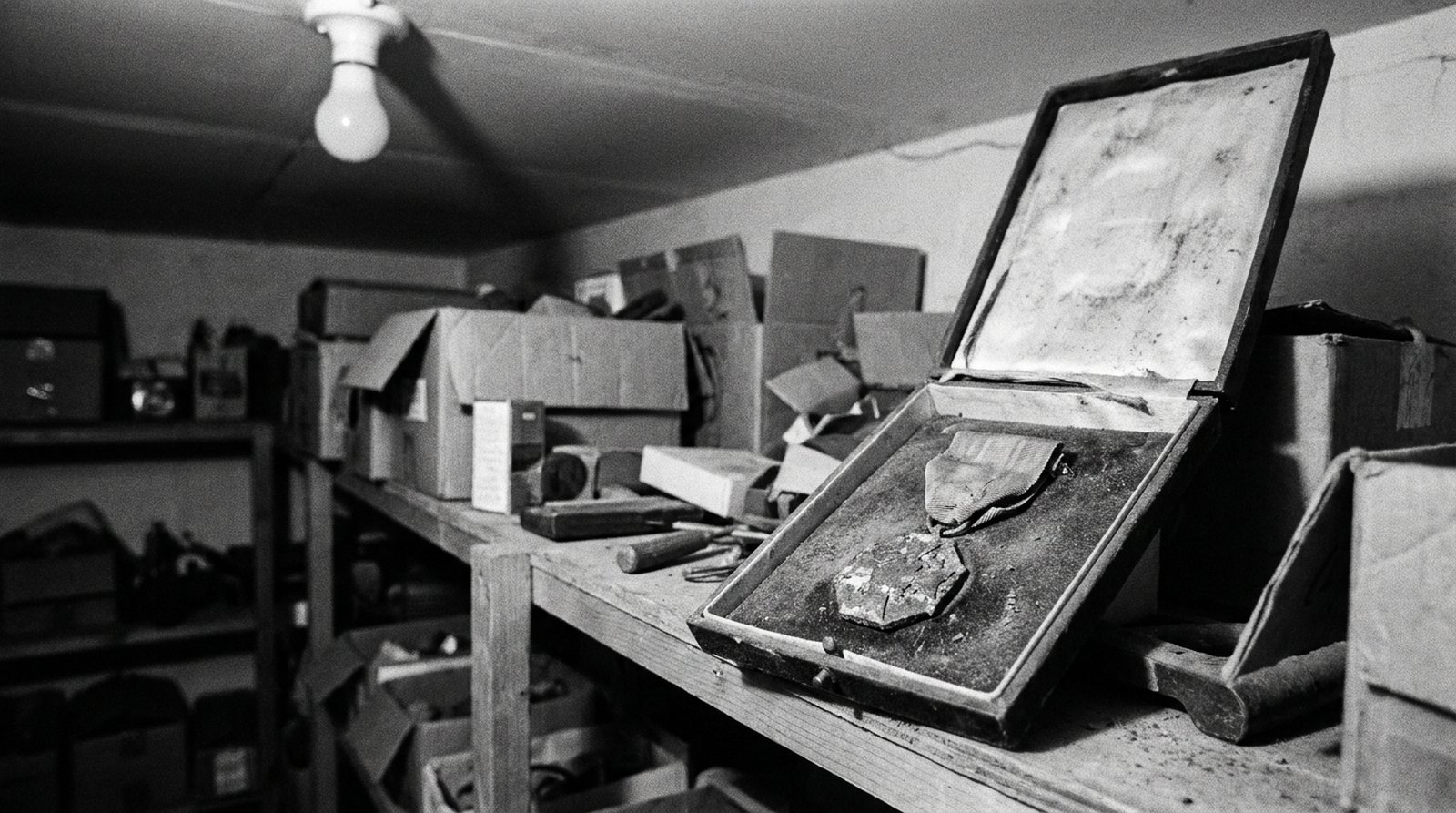
Guglielmo Marconi is the man credited with inventing radio. Almost nobody knows that Marconi's radio transmission used one of Tesla's patents — Tesla was never paid for it, never credited for it. AC generators, AC power systems, the induction motor: Tesla built pieces of the modern world, and none of them kept his name on them. In 1917, the American Institute of Electrical Engineers decided to give Tesla a medal. The Edison Medal. A committee came to tell him they wanted him to wear it. Tesla's answer, more or less: you want? The institute whose name you're selling this medal under is built on my work. This is the mind the whole foundation stands on. People like you never once valued it while it was useful to you, and you'll hang my body up to rot the moment it stops being useful. Tesla believed, right to the end, that there was no politics in invention — that the work would simply speak for itself. By the time he understood how wrong that was, it was too late to fix. He died poor.
That's the law, stated without the dressing: get others to do the work, and take the credit for it. Not because it's fair. Because it's what happens anyway, whether or not you decide to be the one doing it to someone else.

Edison is the other half of this story, and he's worth looking at honestly. He wasn't much of a scientific mind himself. He said once that he never needed to learn mathematics because he could just hire a mathematician. If that sounds hollow, remember this is a man who ended up with over a thousand patents to his name. He said it plainly, in public, more than once: everybody steals in commerce and industry, I've stolen too — I just know how to steal. The difference between Edison and the people he took from wasn't skill. It was that Edison knew exactly what he was doing, and most of the people he did it to never saw it coming.
You've been on both ends of this, whether you noticed it or not. You've presented work in a meeting that somebody more junior actually built, and let "we" carry more "I" than was true. You've also been the one who stayed late finishing the deck that someone else walked into the room and sold. The world runs on exactly two kinds of people: the ones who earn power through their own work, and the ones who earn power through other people's work. If you're capable of anything at all, there will be people circling you, waiting for the moment they can take a piece of what you built and call it theirs. Pretending that isn't true is how you get used the fastest.

Here's the part that costs something, and it's worth sitting with longer than the rest. Tesla's refusal to play this game didn't make him virtuous in any way that paid his rent — he died broke, with his name scraped off half of what he built. But Edison's way of playing it has its own bill, and it comes due slower. A man who takes credit for other people's work once can call it a mistake. A man who does it as a method, every time, for decades, ends up with a name nobody who actually worked under him says with any warmth. Edison is remembered as a genius. He's also remembered, by the people closest to the work, as someone who stole and bragged about knowing how. Both of those are true at the same time, and they don't cancel each other out.
There's a version of this law that doesn't require taking anything from anyone currently alive to take it from. It's time — other people's time, already spent. Learn from people's experience, their mistakes, their finished work. Bismarck said it himself: only a fool learns exclusively from his own experience. Shakespeare built half his plays out of Plutarch's writing and nobody calls that theft, because he put something of his own into what he borrowed. That's the difference worth keeping. Standing on someone's work and saying their name once in a while costs you nothing. It's also the only version of this law that doesn't eventually make people afraid to work near you.

The video this is drawn from ends on a question, and it's worth asking straight: a jackal is tearing into a man's body — which one would you rather be, the man being torn apart, or the jackal doing the tearing? It wants you to answer fast, and to answer jackal. Sit with it one more second before you do, because the question leaves out a detail that Tesla and Edison's whole story just spent itself proving: the jackal eats well and dies unloved by the only people who ever watched it eat. The man gets torn apart, and sometimes, decades later, somebody finally says his name correctly. Neither of those is a clean win. Pick the one you can actually live with being, not the one that sounds strongest when someone asks you the question out loud.
This is Law 7 from Robert Greene's The 48 Laws of Power.