A lie can be caught and disproved, but concealing what you actually want leaves nothing on the record for anyone to catch.
A twenty-two-year-old named the Marquis de Sévigné wanted a woman he couldn't have. So he did what young men with too much heart and not enough sense tend to do — he told someone. Not the woman. He told Ninon de l'Enclos, the most talked-about courtesan in seventeenth-century Paris, a woman who had spent thirty years making a study of exactly one subject: what people actually want, as opposed to what they say they want.
At first she found his lovesick reports funny. Then she got tired of watching him flail and decided to run the campaign herself.
Her instructions were precise. Stop chasing. Show up at parties with other women on his arm. Skip the events the Countess expected him at and turn up somewhere she didn't — a gallery, a museum, anywhere that had nothing to do with her. Let the ground shift under her without ever telling her why.
It worked exactly as designed. The Countess went from amused, to confused, to jealous, to unable to stop asking about him. Weeks of careful engineering collapsed in the one moment Ninon never scripted — alone with her at last, the Marquis said the sentence that ruins everything. "I love you. I did all of this for you."

The spell didn't survive the sentence. Five minutes earlier his distance had looked like charm. Now it looked like exactly what it was — a performance, confirmed out loud by the performer — and she walked out without a word. He never got near her again. He wasn't punished for wanting her. He was punished for saying so.
That's the whole law in one sentence. Robert Greene calls it Law 3: conceal your intentions. Not "don't lie" — conceal. Keep the real shape of what you want somewhere nobody can reach it, because the instant they can see it, they can defend against it, refuse it, or simply leave.
A lie is a claim, and claims can be checked. Catch someone in one, hold it up against the facts, and it falls apart in front of everyone. Concealment isn't a claim. It's an absence. You haven't said anything false — you've just declined to say the one true thing that matters. There's nothing to catch, because there's nothing there to find. That's why a bit of false sincerity and a vague signal does more work than any outright lie ever could, and why the most useful thing on your body, in this game, is your own face held still.

Watch someone run the law the other direction — not hiding desire, but hiding intention, in front of an entire parliament. In 1850, a thirty-five-year-old Prussian deputy named Otto von Bismarck stood up while half the country screamed for war against Austria. The future king wanted it. Most of the room wanted it. Bismarck, a former soldier who knew exactly what war cost, argued against it — asked the men cheering for it whether they'd looked a farmer in the eye after his fields burned, or stood in front of a father who'd buried his son. The room turned. The king was delighted. A patriot, a peacemaker, promoted on the spot from deputy to cabinet minister.
Here's the part that matters: Bismarck wanted that war from the start. He just knew Prussia's army wasn't ready in 1850, and he knew that saying so — "we aren't strong enough yet" — would have ended him before he'd begun. So he said the opposite of what he believed, got rewarded for it, and years later, once Germany was unified under Prussia the way he'd wanted all along, he declared war on Austria himself. "Wars are not won by speeches or promises. Wars are won by iron and blood" — the same man, a few years and one concealed intention apart.

Most people never get this far, because most people are what Greene calls an open book, and he doesn't mean it kindly. You'll hear total honesty dressed up as a virtue — say what you mean, people respect that. They don't, not reliably. Handing someone your real motives usually just gives them a reason to be hurt, insulted, or against you. Tell people what they want to hear. Let your stated intentions do the talking in the room, and keep the real ones somewhere else entirely. Just don't overplay it — too much visible passion draws exactly the kind of attention you were trying to avoid. Say only as much as the moment requires, and no more.

For proof of how far this runs, look at Joseph Weil. In 1910, a semi-retired Chicago businessman named Sam Geezil — comfortable, bored, still hungry for one more deal — was approached by a young man with inside knowledge of a hunting lodge about to be resold for a six-figure profit. Weil only shared the "secret" after swearing Geezil to silence, which is the oldest trick going and somehow still works — nothing sells a lie like asking someone to protect it. Geezil put up thirty-five thousand dollars to play his part in the scheme.
The deal came with an ageing, soft, grey-haired "boxer" named Gross, who Weil swore could flatten anyone. When one of the supposed financiers bet his own fighter against him, Weil goaded the stakes up by another thirty-five thousand — money he and his uncle didn't actually have, so they borrowed it from Geezil himself. The fight started. Gross dropped in one punch, declared dead on the spot by a "doctor" at ringside. Everyone scattered, Geezil fastest of all, so relieved to escape a murder charge that he never once looked back at the money he'd just handed away. Gross stood up the moment Geezil was gone. Nobody had died. Nobody had even thrown a real punch.
Weil never had to work hard to hide his actual intention, which was simply to take Geezil's money. He just had to keep Geezil's attention locked onto something Geezil already trusted — a deal, a deadline, a secret — so completely that an unfit man in boxing shorts never once looked suspicious. People rarely question what's already familiar to them. Which means the easiest place to hide an intention is directly behind the thing your target already believes.

So how do you see it coming? You can't catch concealment by hunting for a lie, because there isn't one on offer. What you can watch is the shape around it. Ask what a person's stated position actually costs them — Bismarck's peace speech cost him nothing and got him a promotion, which alone should have made somebody in that room ask why a lifelong soldier was suddenly its loudest pacifist. When someone's declared intention happens to serve their own interest exactly as well as it serves yours, that alignment deserves a second look, not an easy pass. And ask where your attention has been pointed, and what's moving just outside it — Geezil was so locked onto the deal and its secrecy that a man in his sixties pretending to be a prizefighter walked right past him unquestioned.

Notice, too, the noble gesture that arrives a little too on cue. Greene is blunt about this one — show people you're a good person, let them see the charity, the kindness, the helping hand, and use the goodwill as cover for whatever you're actually doing underneath it. That doesn't mean every kind act is a con. It means a kindness performed loudly, in front of exactly the people whose trust you need, is worth separating from the kindness nobody was watching you do. People accept as true whatever is placed directly in front of them, and politicians have built entire careers on knowing it. What you can see is only ever a fraction of what's real. Power, run properly, works from the part of the room nobody's looking at.
For what the finished version of all this looks like, there's Haile Selassie. In 1927, the young Ethiopian noble known as Ras Tafari summoned the country's warlords to Addis Ababa to swear loyalty to him as leader. One, Dejazmach Balcha of Sidamo, a genuine war hero who thought Selassie weak, refused to come quietly. He camped ten thousand men three miles outside the capital and agreed to a banquet only with six hundred of his finest warriors beside him, instructed not to eat or drink a single thing they were offered.
Selassie gave him everything he asked for — full honours, songs sung for Balcha instead of the host, total deference, right down to absorbing Balcha's threat to his face and assuring him, sincerely, that he meant no harm at all. Balcha left convinced Selassie was terrified of him, and told his men exactly how he planned to deal with the man within weeks.
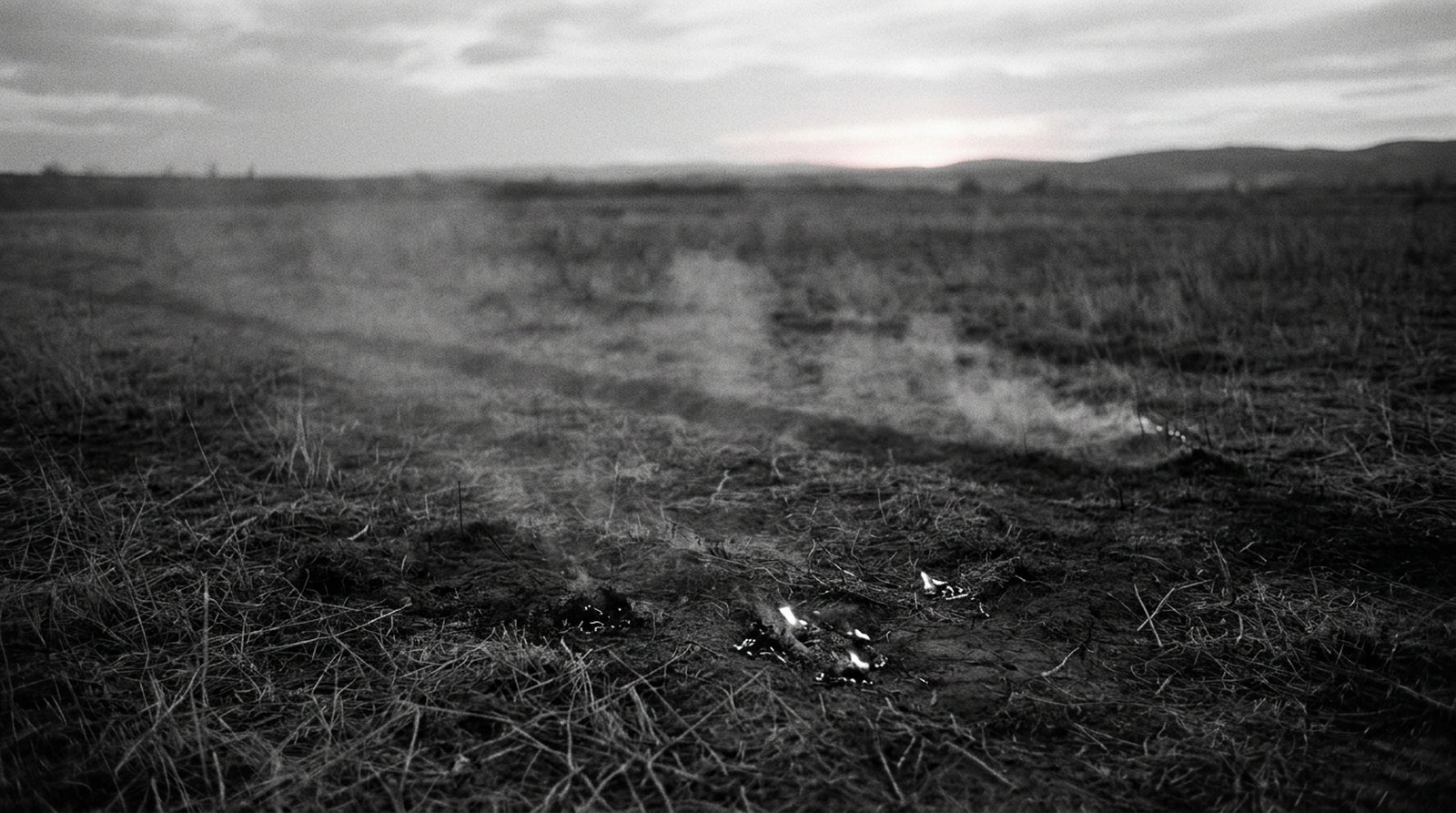
He got back to camp to find smoke. While Balcha had been eating, Selassie's men had walked through his unguarded army with enough gold to buy every weapon in it, threatening or simply stealing whatever nobody would sell outright. Ten thousand men, disarmed without a single shot fired, in the time it took to eat a meal. Balcha and his six hundred found Selassie's own forces waiting on the road out, unable to fight the army ahead of them or the one behind. He knelt, for the first time in his life, and later paid Selassie the only compliment that fits here: "Do not take Tafari lightly; he may look like a mouse, but he possesses the strength of a lion."
Both this video and Greene's book close on the same line, from P. T. Barnum — "The world wants to be deceived" — like it's a joke that lets everyone off the hook. Maybe it is. But look at what sits on both ends of this law before you decide to live by it full time.
The Marquis lost everything the instant he opened his mouth. That's the cost of concealing nothing. But Selassie — the one who actually won, the mouse with the lion's strength — never once, through any of this, let a single person close enough to know what he actually thought. That isn't free either. Run concealment as a permanent setting and you stop getting caught, because there's never anything on the record to catch. You also stop being known — not by rivals, not by warlords, and eventually not by the people who were never the target at all, because a habit like that doesn't switch off for them either.
Most days you're not disarming an army. You're deciding how much of what you actually want to say out loud in a meeting, a negotiation, an argument with someone who loves you. The law isn't "never tell anyone anything." It's notice what you hand away for free, every time you explain yourself before anyone's even asked. Keep that, and you keep an edge. Spend it on everyone, all the time, and eventually there's nobody left who actually knows you — some days, including you.
Robert Greene lays this out as Law 3 in The 48 Laws of Power.