Impressing the person above you and pleasing them are opposite moves, and Fouquet and Galileo's opposite fates show which one actually keeps you safe.
Paris, 1661. The king's prime minister drops dead with no warning, and the whole court starts guessing who gets the job next.
The obvious answer is Nicolas Fouquet, the finance minister — a man rich enough to throw parties nobody else in France could afford, and close enough to the king that half the court already assumed the position was his. Then Louis XIV does something nobody saw coming. He doesn't hand the job to Fouquet. He abolishes it. No prime minister at all, for anyone.
Fouquet reads this as a warning. Maybe the king is forgetting him. Maybe his favour is slipping. So he does the thing a finance minister with a vault and an ego does when he feels himself losing someone's attention — he throws a party to win it back.
Officially, the party marks the finishing of his new palace, Vaux-le-Vicomte. Underneath, the real reason is simpler. He wants to hand the king a tribute so large that the king can't help but look at him again.
So he goes all in. The king gets the guest-of-honour seat. Molière, the best writer alive that year, is hired to put on a play for the evening. The food is dishes France has never seen on one table. Half the nobility is there, plus a handful of the king's own friends. Every detail of the night is aimed, on purpose, at Louis.
It works — in the worst way it possibly could. The party is so good that by the end of it, nobody is talking about the king. They're talking about Fouquet. Even Louis's own friends can't stop praising him.
By the next morning, two of the king's men arrest Fouquet. The charge: stealing gold and money from the royal treasury. Here's the part that should bother you — he had stolen it, but the king already knew. The king had allowed it, maybe even asked for it. None of that mattered the second he had to watch his own friends fall in love with his finance minister's taste. Fouquet goes to prison and stays there. Louis replaces him with Jean-Baptiste Colbert, a man with his own reputation for spending big, and lets him pour treasury money into a palace even grander than Fouquet's. Colbert throws his own opening party. Bigger than the one that cost Fouquet his freedom. Nobody arrests him for it.

Now hold that story against a very different one, half a century later, in a different country, with a man who read the room correctly.
Galileo understood something Fouquet never worked out — rulers don't actually care about your invention. They care about their own name attached to it. So that's what he gave them. A military compass, dedicated to the Duke of Gonzaga. A manual on how to use the compass, dedicated to the Medici family. The compliments and gifts rolled in after that. The money didn't — patrons loved being flattered far more than they loved paying for it.
In 1610, Galileo finds the four moons of Jupiter. He could have split the credit a dozen ways, kept some of it for himself, called it science. Instead he hands the entire discovery to the Medici — not as patrons, but as something closer to gods. Cosimo I, the first Medici duke, had already taken Jupiter as his family's emblem, so Galileo pushes the idea further: Jupiter is Cosimo, the four moons are his four sons, and the arrangement of the solar system itself seems to confirm that heaven wants the Medici name remembered. Cosimo II is so moved by this that he names Galileo court philosopher and mathematician, on a full salary, for life. For the first time, Galileo has money and a position he doesn't have to re-earn every year.
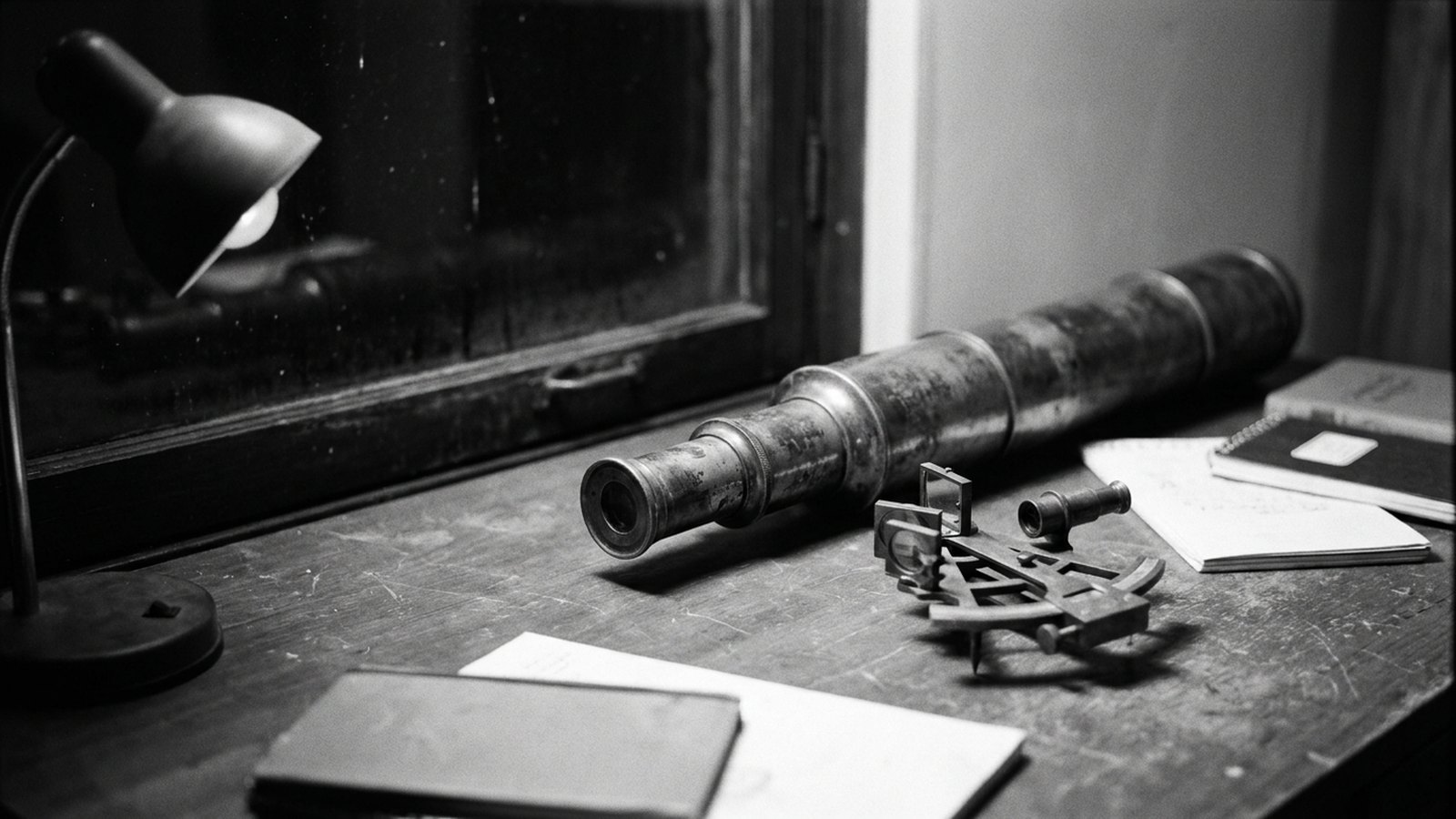
Robert Greene calls this the first law of power: never outshine the master. Make the people above you feel superior, always, and don't let your real talent show so loudly that it embarrasses them. Fouquet and Galileo wanted the exact same thing, in the end — a ruler's lasting favour. One tried to earn it by being impressive. The other earned it by making someone else feel important. Those sound like the same move from a distance. They are opposite moves, and only one of them keeps you out of prison.
Pleasing someone means handing them a feeling they already want to have. Impressing someone means handing them proof that you don't need them nearly as much as they assumed. The first keeps you safe. The second puts a target directly over your name, because now the person above you has to wonder, quietly, whether they actually still run the room.

That wondering is the whole mechanism, and it is more common than you'd think. Anyone with power over you is less sure of holding it than they look from where you're standing — a manager who got the title but not the respect, a client who knows a cheaper version of you exists, a parent who senses the balance in the house has quietly shifted. Hand that kind of person a reason to feel small, even by accident, even while trying to help them, and watch how fast warmth turns into suspicion. It isn't fair. It isn't really about you at all. It's about what your competence makes them feel about themselves.
Follow the law properly and it costs you something real — a slow habit of making yourself smaller than you are. If you're sharp, you soften it. If you're charming, you turn it down a notch. You start manufacturing small, harmless mistakes on purpose, the kind that require your master's help to fix, because needing to rescue you is the best feeling you can hand someone with power. Do this for a few years and you stop noticing you're doing it. You just quietly stop bringing your best idea into the room where it would actually land.

None of this means every person above you earns your deference forever, and this is the part most people skip when they repeat the law like a slogan. The law only applies to a master standing on solid ground — someone powerful enough, and useful enough to you, that making them feel secure is actually worth something. If your master is already hollow, already weak, already on the way out, the rule flips completely. Show no mercy in that case. Use everything you have to bring them down, properly, so there's no coming back from it. Outsmart them and take the power yourself. Power, in the end, answers to one thing above everything else — timing. Your only real job is picking the right moment and not flinching once you've picked it.

Think about where you already do the first version of this, quietly, most weeks. The idea you had in the meeting that you let someone else present back to the room, slightly worse, because it read better coming from them. The message where you typed the sharp version and sent the duller one. The project where you knew the fix before your manager did and still waited for them to find it, just so they'd feel like they found it. Small moments. You've probably stopped registering them as moments at all.

That's the actual discomfort worth sitting with here, not the history. Is dimming yourself on purpose cowardice, or is it just arithmetic — the plain cost of staying in rooms where someone above you needs to feel bigger than you? Fouquet never asked that question. He assumed talent announces itself and gets rewarded for it. Galileo asked it constantly, and died rich, titled, and free, while Fouquet died in a cell. A clever person isn't the one with the most to show. It's the one who knows exactly when to show it, in front of exactly who, and when to step back into the dark on purpose.

This is the first of Robert Greene's 48 Laws of Power.