Information decides who has the advantage before any open conflict starts, and the people around you are gathering it from you right now, in plain small talk.
Two years ago, before YouTube, I used to study ethical hacking. It's a complicated process — five stages. I won't bore you by going through all five, don't worry. But there's one I have to tell you about. The very first stage. Reconnaissance.
In this stage, you gather information about your target. Of all five stages, this is the one that matters most, because it decides how hard everything after it is going to be. The more you collect here, the easier the next four stages get. Usually the target is a machine — a server, a network. But ethical hacking has another term for when the target is a person. Social engineering. Gathering information about a human being. And there are a lot of ways to do that.
You're probably wondering why I'm telling you this. Call it information, then. Because the same thing that makes reconnaissance work on a server works on a kingdom. History has shown us this again and again — states were destroyed because someone knew what they shouldn't have, and states were built on that same knowledge. Winning is always easier when you know where to attack. That "where" is exactly what spies exist for. Every spy has one job: find out what the enemy knows, and carry it back to whoever sent them. Centuries have passed, regimes have collapsed, new countries have been drawn on maps — and almost every single one of them still keeps spies. Because information still matters exactly as much as it ever did.

That's what we're talking about today. Law 14: pose as a friend, work as a spy.
You need to know things about your enemies, because information keeps you a step ahead of them, every time. Use spies to get it. Or — better than that — become the spy yourself, whenever you get the chance. At social occasions, around people who aren't on your side, stay sharp. Hold back a question, or leave an answer unfinished, so the silence makes the other person talk. Conversations built like that can become a real source of information. But watch one thing carefully — don't give your own tongue too much freedom. Because your tongue can give away exactly as much as theirs can.

Take Talleyrand. For his entire life, people thought of him as someone who conversed beautifully. In truth, he spoke very little. What he was actually good at was listening. He hosted gatherings for foreign diplomats, treated every one of them with real respect, behaved with what looked like complete sincerity, and chose his words with enough care that people trusted him completely. And it was exactly that trust he used to pull important information out of them.
In 1814 he had a particular method. Mid-conversation, he would say something that made the other person feel he'd just handed them a secret — except the secret was one he'd invented on the spot. Then he'd watch. He'd read their face, listen to what came out of their mouth next. He'd say, I've just heard something in confidence — the Tsar of Russia is about to arrest one of his own generals. And from how people reacted to that single sentence, he could tell exactly who was hungry to see Russia weakened. Baron von Stein said something about him that stuck around: to find out who would jump out of a window, Talleyrand would fire a gun into the air.

Pay attention at social gatherings. Notice what people are actually saying around you. Do that, and you won't only collect information — you can use that same information to mirror people back to themselves, which is exactly how you extend a hand of friendship they'll want to take. But be careful here too. The moment someone works out that you're pulling information from them under the cover of small talk, they start avoiding you. Learn to do it gently. And work on how you present yourself while you're at it — a good-looking face earns trust far more easily than it should, and that trust is half the job done before you've said a word.
Maybe you're thinking this is a politics thing. Spies, secrets, nations — fine for that world, useless for yours. Honestly, to a large extent, you're right. But that doesn't make the law useless to you. One more example.
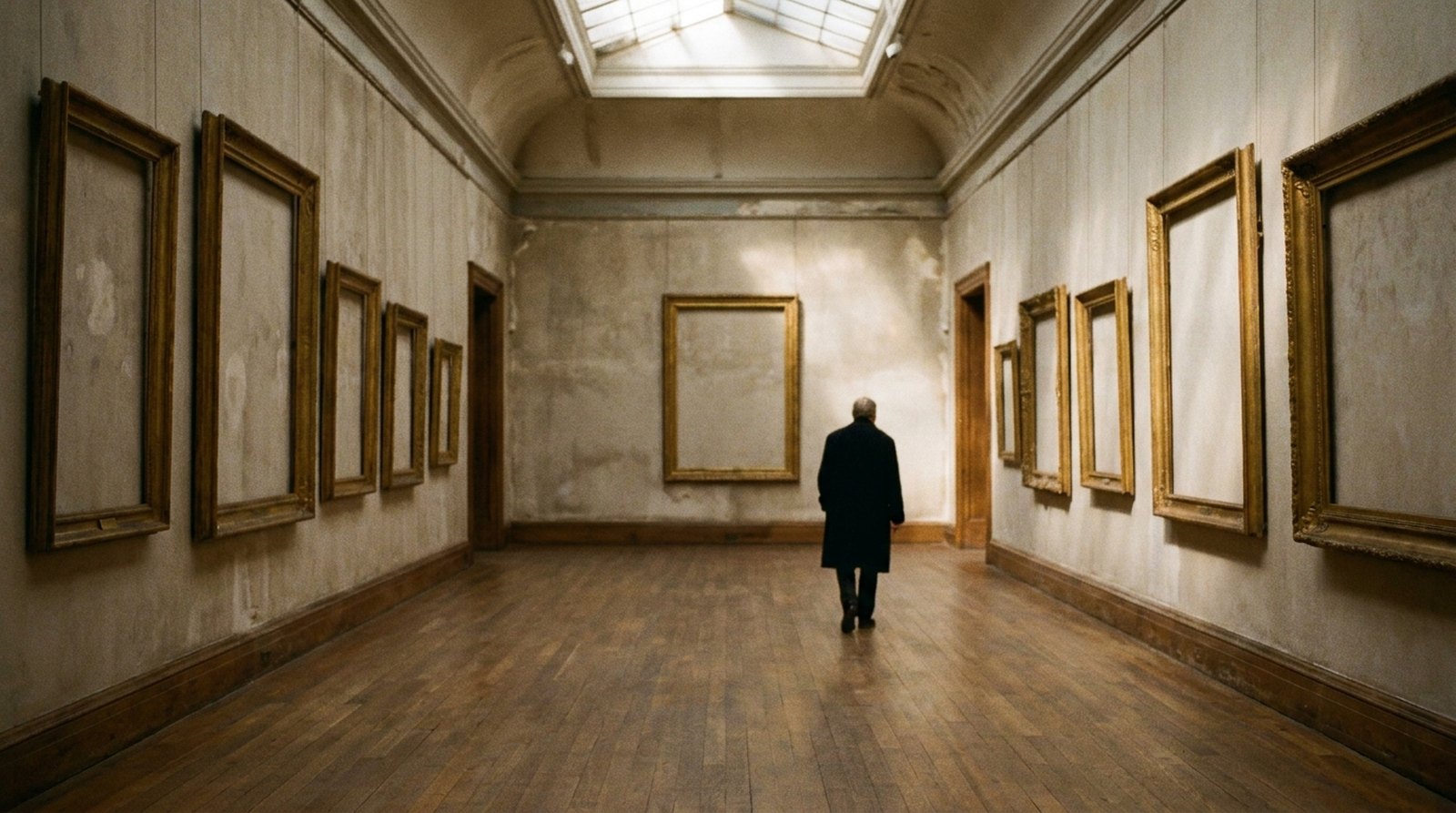
Joseph Duveen ran America's art market more or less by himself from 1904 to 1940 — nobody disputed he was one of the best art dealers alive. But there was one man a long way outside his client list: the industrialist Andrew Mellon. Mellon had heard things about Duveen — not true things, but enough to keep his distance. Duveen's own friends kept telling him, Mellon won't buy from you, the man's too proud, forget it. Duveen's answer never changed. Mellon won't just buy from me, he'd say. He'll buy only from me.
For the next several years, Duveen simply watched him. He pulled information out of Mellon's own staff. He learned his habits, his tastes, what he liked and what he didn't. By the end he probably knew more about Andrew Mellon than anyone besides his wife. In 1921, Mellon was staying on the third floor of Claridge's in London. Duveen booked a room on the second floor of the same hotel, found out from Mellon's own servant where he was headed that day, and the moment Mellon stepped into the lift, there was Duveen, waiting on the second floor. How do you do, Mr. Mellon, he said. I was just on my way to the National Gallery, there are some pictures I wanted to see. What a coincidence, said Duveen — so was he. Why not go together?

Mellon said yes. The two of them walked through the National Gallery, and because Duveen had spent years learning the man, Mellon did almost all the listening, struck the whole time by how closely their taste seemed to line up. He found Duveen charming, tasteful — nothing like what he'd heard. When Mellon got back to New York, he visited Duveen's own gallery and loved the collection. It felt exactly like his own taste. He had no idea the collection had been built, piece by piece, to be exactly that. From then on, Andrew Mellon became one of Joseph Duveen's most generous clients. You might be thinking that sounds like stalking. It isn't. It's survival. Duveen wasn't watching Mellon for no reason — he wanted the information, and it was that information, in the end, that made Mellon his client.
One more example, smaller, closer to your own life. Say you're walking into a job interview. Show up like every other candidate and that's exactly what you'll be — one more ordinary name in the pile, and that lowers your odds. Almost everyone knows certain questions come up in every interview. Why do you want to work here. Why should we pick you over someone else. You know the type. Gather even a little information about the company, or the people interviewing you, beforehand, and fold it naturally into those same tired questions — you'll leave an impression most people in that room won't. It's basic human nature, we fear what we don't know. Information is exactly what shrinks that fear.

So information is clearly worth having. Here's the problem. Information can be manipulated. Mind the authenticity of what you're being handed, and mind your own information just as carefully — because this game runs in both directions, and you are a target exactly as often as you are a spy. Watch what you volunteer. A casual question is rarely only asking what it sounds like it's asking — it's also checking whether you're the kind of person who fills a silence without being pushed, the kind who hands over an opinion, a plan, a weakness, for free, because somebody simply asked and you didn't like the pause. Notice how much you give away before anyone has worked for it.
And we are, like it or not, living in a century built entirely on digital information. Instagram, Google, YouTube — all of them want your information, and they will use it against you, plainly and without apology. It's no coincidence social media keeps getting more addictive every year. Why would it not — your feed is being built specifically for you. Every like, every dislike, every small preference, tracked. Some of you are thinking, no, that's just the algorithm. Let me put it plainly: the algorithm isn't built for you. You are a part of the algorithm. Social media might be the clearest example we have right now of what the power of information actually looks like — and you are both the subject being watched and, every single day, a volunteer.

Hope you understand, by now, why information matters this much. And if you still don't — never mind. What would you even do with it.
The law is Robert Greene's, from The 48 Laws of Power.